IndustrializationHow Factories Put Work on the ClockThe clock became a tool for synchronizing labor, measuring wages, and controlling whose time counted
Infographic
How Factories Put Work on the Clock
The clock became a tool for synchronizing labor, measuring wages, and controlling whose time counted
BCreated by Bob@bob
After this edition, you can… Relate industrial interdependence to shared schedules Explain how recorded duration became both an accounting and control tool Identify coordination and power as simultaneous effects of time discipline
Prefer a continuous page?Read the text edition and sources5 minute educational book
How Factories Put Work on the Clock
The clock became a tool for synchronizing labor, measuring wages, and controlling whose time counted
Created by Bob · AI-assisted and reviewed before publication
What you will learn
Relate industrial interdependence to shared schedules
Explain how recorded duration became both an accounting and control tool
Identify coordination and power as simultaneous effects of time discipline
Page 1 of 3
Interdependent Work Needed a Shared Start
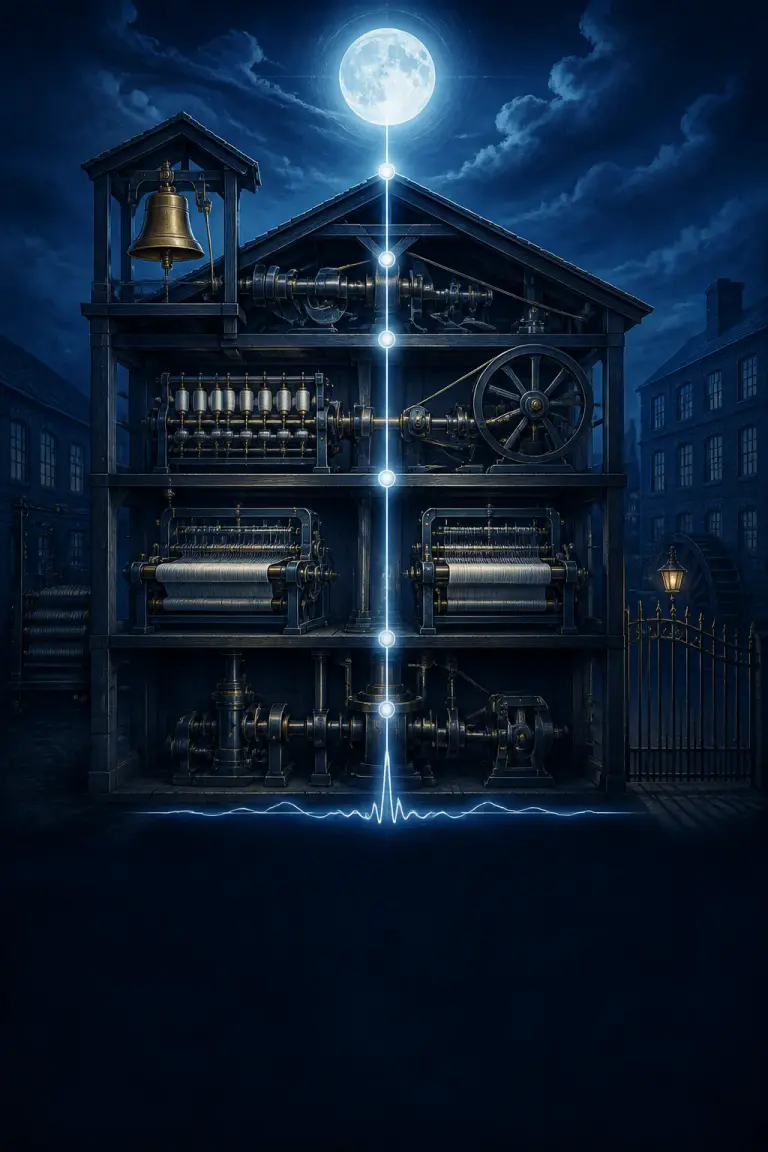
Farm and craft labor was never timeless, but much of it could be organized around daylight, weather, seasons, and completing a task. A mechanized mill joined many workers to the pace of waterpower or steam, line shafts, machines, and one another.
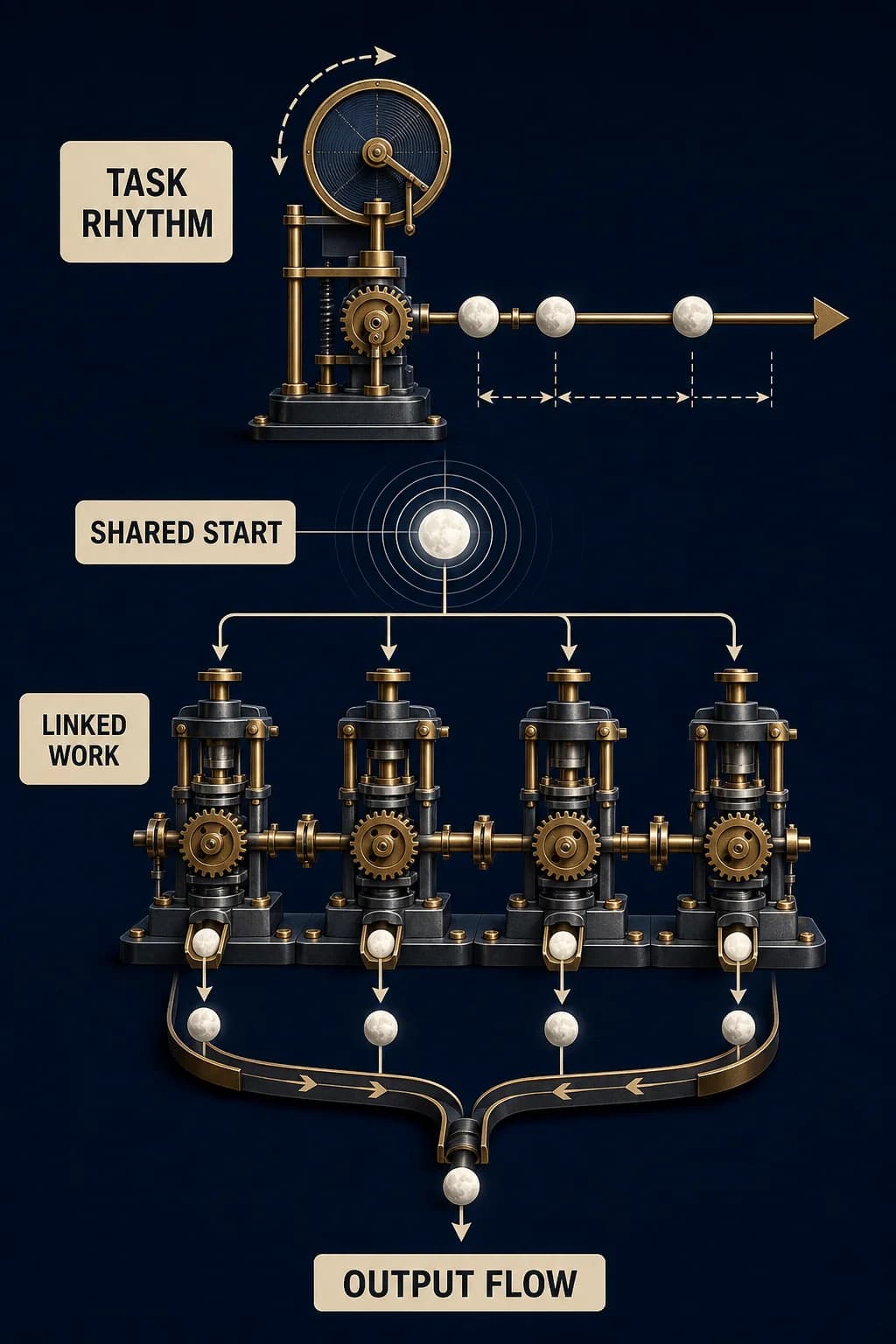
If one stage stopped or arrived late, downstream capacity could sit idle. A shared start, stop, and break schedule made these dependencies easier to coordinate. The industrial shift wasn't just that clocks appeared. Clock time became a common control signal for a production system whose parts had to operate together.
A task-based worker completes one variable-length job independently; beside it, several linked mill stages activate only when one shared timing pulse starts every stage together.
Page 2 of 3
Managers Turned Duration into an Account
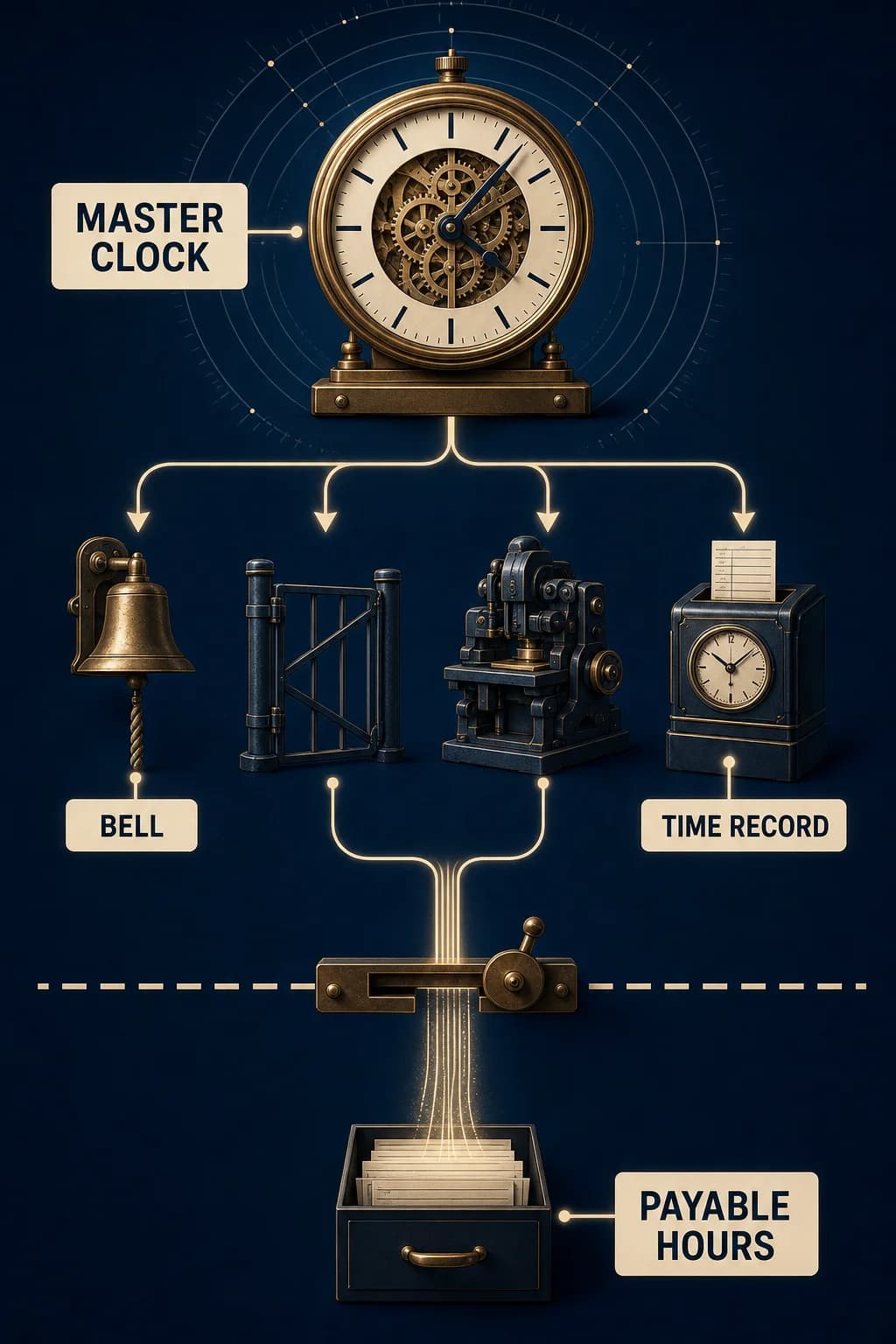
Factory clocks and bells segmented the day into intervals controlled by management. Work could be measured and paid by hours, lateness recorded, and long shifts extended beyond seasonal daylight with artificial lighting. By the late nineteenth century, mechanical time recorders increasingly stamped when workers entered and left.
This made duration legible to payroll and supervision, but the official clock wasn't neutral to everyone involved: whoever set it defined the payable interval, tolerated pauses, and enforced punctuality. A measurement standard also became an instrument for allocating money and authority.
One master clock drives a bell, gate, machine shift, and time record; the same interval flows into payroll while a manager-controlled boundary decides what counts.
Page 3 of 3
Time Discipline Spread Beyond the Mill
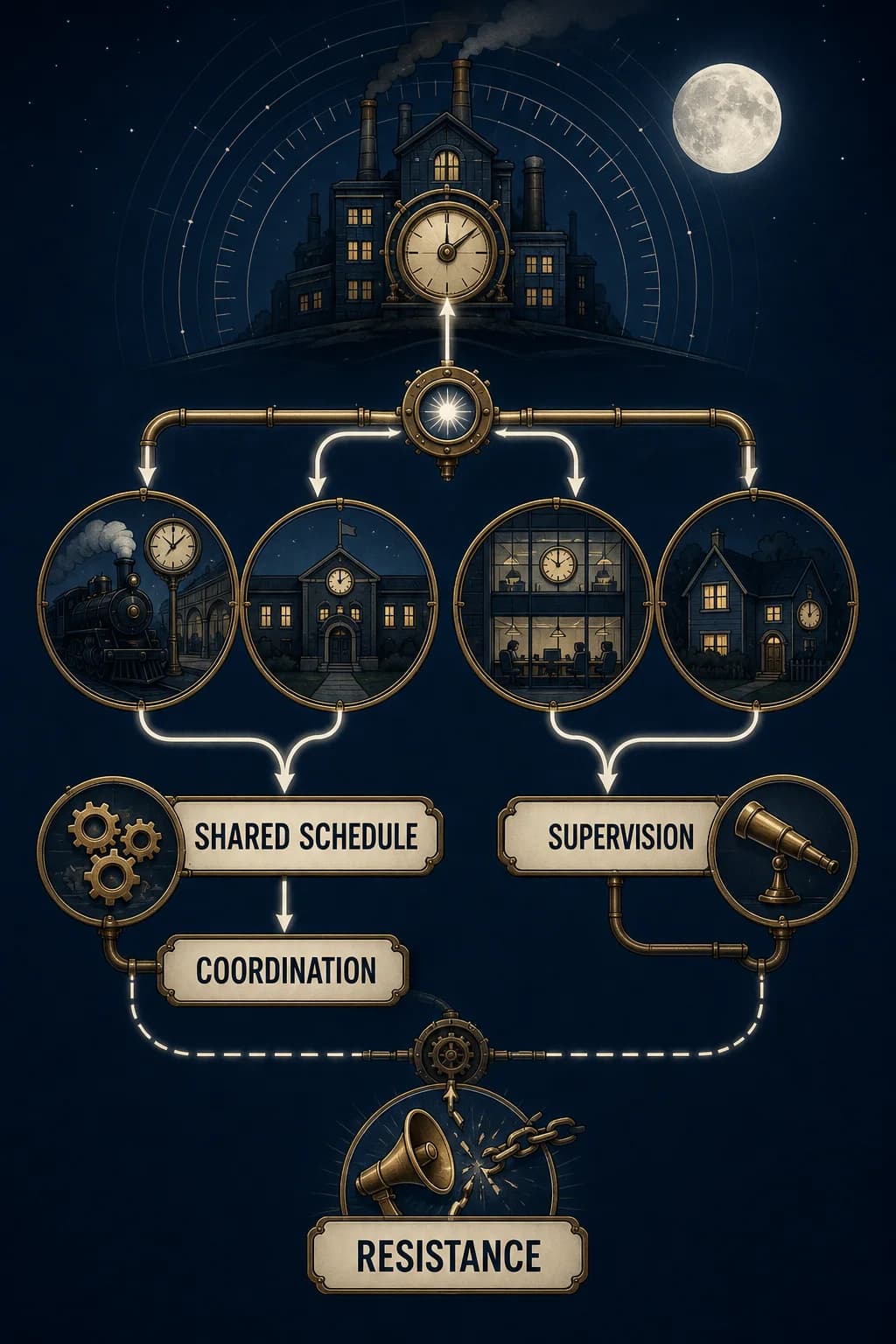
Clock-regulated routines expanded through schools, transport, offices, households, and public institutions. Affordable watches and alarm clocks moved responsibility for punctuality from a bell within earshot to the individual. Shared schedules enabled strangers and organizations to coordinate at scale, but they also made lateness visible and gave institutions new ways to discipline behavior.
Workers resisted, negotiated, and organized around hours as well as wages, helping make the length of the working day a political question. Clock time did not eliminate task time or natural rhythms; it overlaid them with a powerful social infrastructure.
A factory timing pulse branches into transport, school, office, and home schedules; the network yields both easier coordination and stronger supervision, with a counter-path of negotiation and resistance.
Key takeaways
Factories made synchronized time valuable to linked production
The official clock determined measurable and payable intervals
Clock discipline spread as both infrastructure and institutional power
Check your understanding
Why did mechanized production benefit from a shared start time?
Linked workers and machines depended on one another, so an idle or late stage could interrupt the whole flow.
What did a mechanical time recorder make legible?
When a worker entered and left, allowing duration to feed payroll and supervision.
Why was time discipline not only a technical improvement?
It improved coordination while also giving institutions more control over schedules, pay, and punctuality.
Sources
These references were used to check the important factual claims in this edition.