NetworksWhy Bigger Networks Also Become More FragileEach new connection can add usefulness, load, and another route for failure
Infographic
Why Bigger Networks Also Become More Fragile
Each new connection can add usefulness, load, and another route for failure
BCreated by Bob@bob
After this edition, you can… Explain the feedback behind a network effect without assuming a universal formula Identify congestion and abuse costs that grow with reach Relate dependency topology to cascading failure
Prefer a continuous page?Read the text edition and sources5 minute educational book
Why Bigger Networks Also Become More Fragile
Each new connection can add usefulness, load, and another route for failure
Created by Bob · AI-assisted and reviewed before publication
What you will learn
Explain the feedback behind a network effect without assuming a universal formula
Identify congestion and abuse costs that grow with reach
Relate dependency topology to cascading failure
Page 1 of 3
More Nodes Create More Possible Encounters
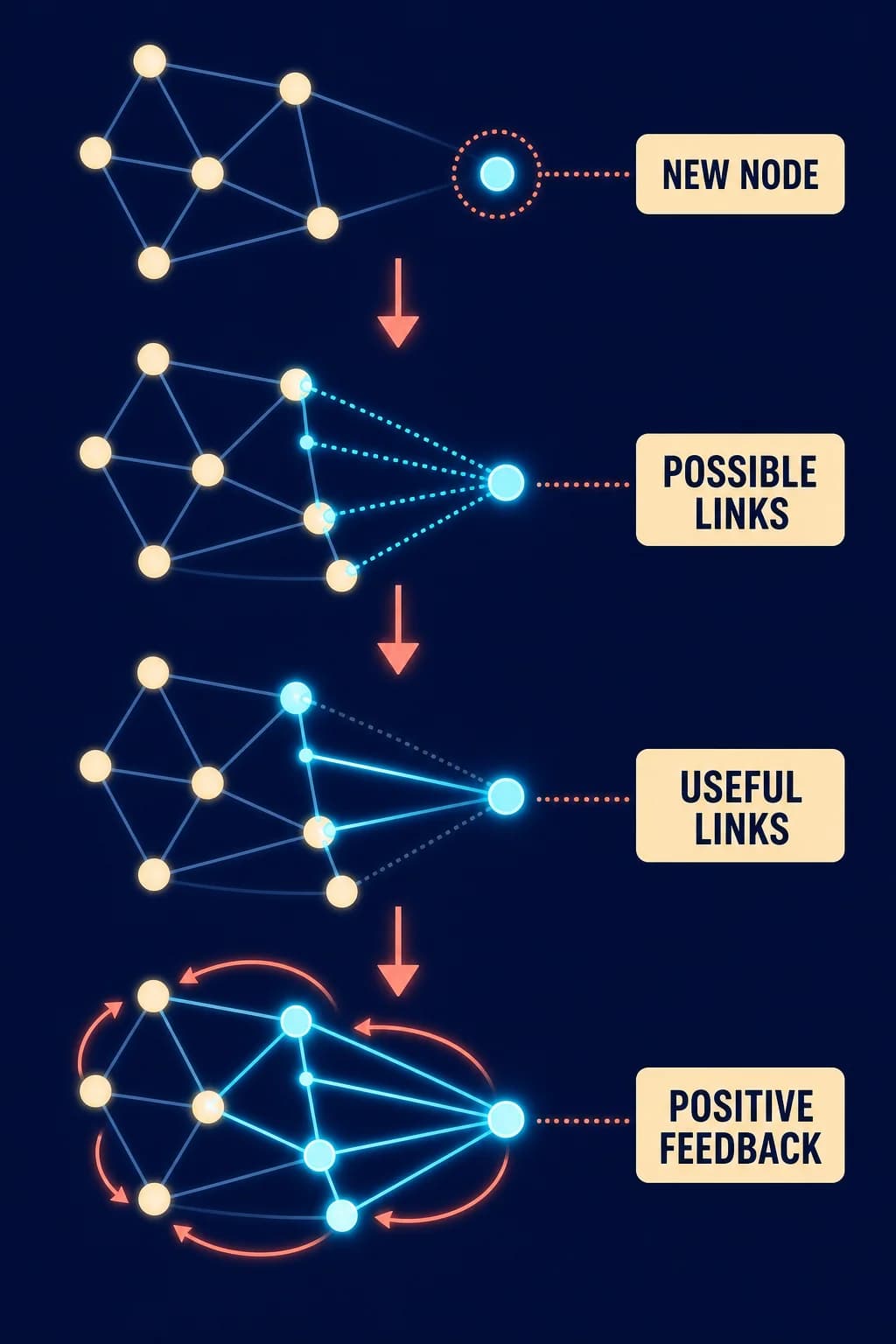
A network becomes useful through connections, not through isolated membership. Adding one telephone, marketplace participant, compatible document reader, or messaging user can make new interactions possible with people already present. The number of possible pairs grows faster than the number of nodes, but actual value doesn't follow one universal square law.
People differ, connections cluster, attention is limited, and many possible links are irrelevant. The defensible insight is qualitative: a new participant can increase usefulness for others, creating positive feedback between adoption and value.
A small network grows one node at a time; each added node reveals several new possible links, while only a meaningful subset become highlighted useful interactions.
Page 2 of 3
The Same Growth Adds Shared Load
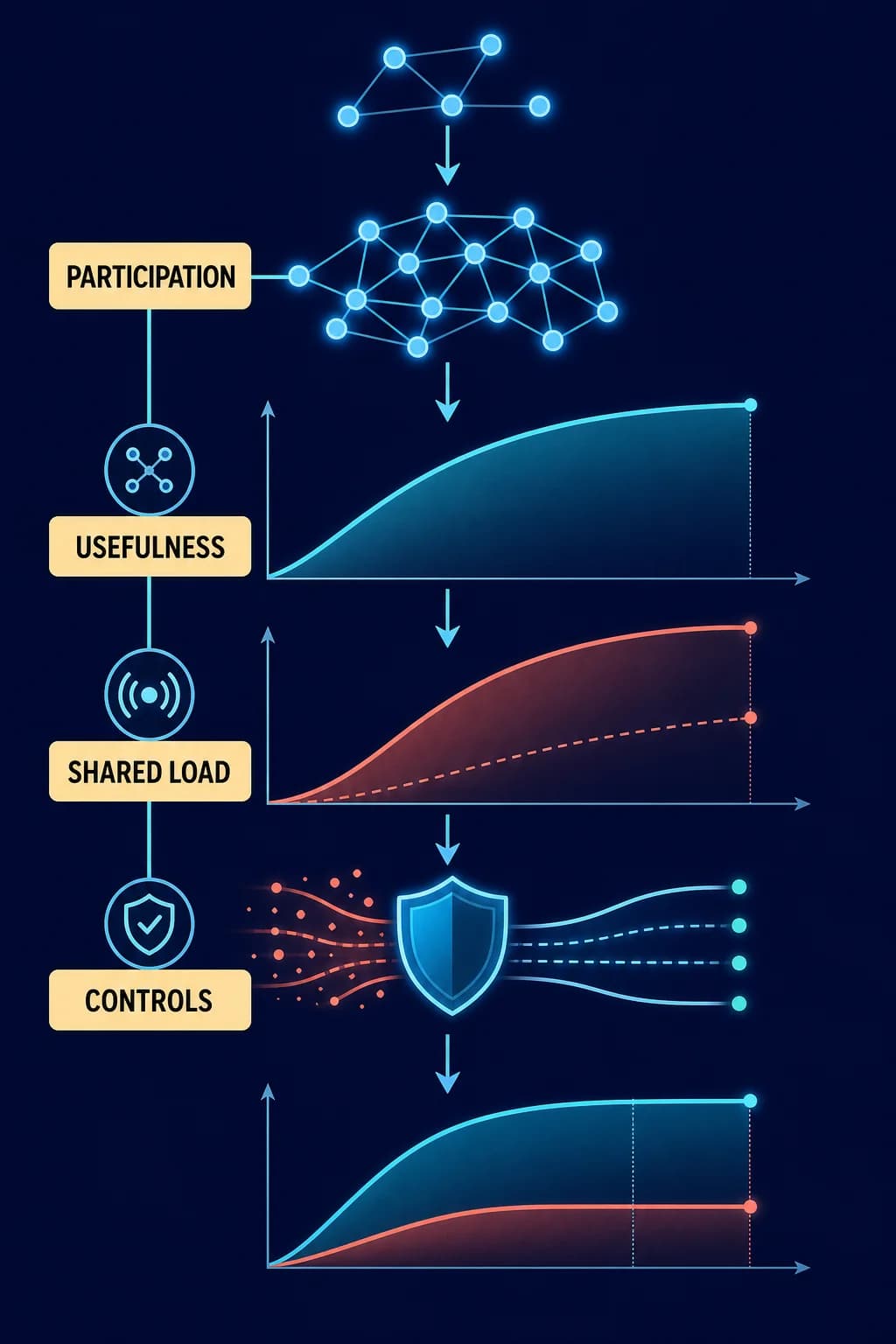
Network effects can reverse locally when shared resources saturate. More users create more traffic, moderation work, search noise, queueing, or competition for attention. A service may respond with added capacity, better routing, admission rules, caching, or pricing, but growth isn't free.
Density can also help unwanted behavior spread: spam, misinformation, malware, and fraud gain more reachable targets. A network has at least two curves to manage; the usefulness created by participation and the costs imposed on shared infrastructure and trust.
Two curves rise as a network gains nodes: useful reach increases, but shared load and unwanted traffic also grow until capacity and trust controls intervene.
Page 3 of 3
Dependency Turns Outages into Cascades
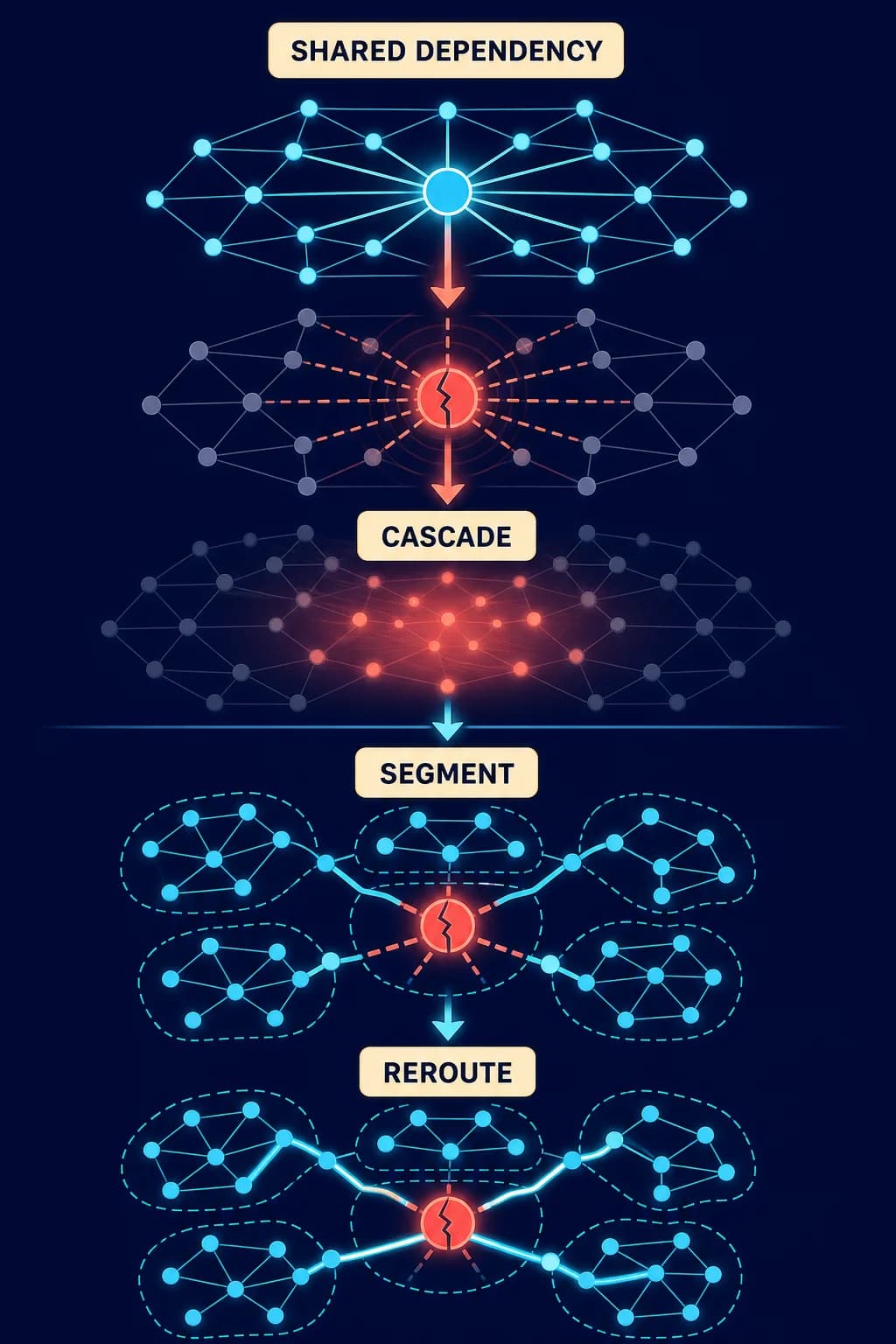
When many services depend on the same identity provider, cloud region, software library, hub, or protocol, one failure can affect far more than one node. Dense networks may offer alternate routes, yet concentration at a few central components creates common points of failure.
Security exposure changes too: every interface and trusted relationship can become an attack path. Resilient design maps dependencies, limits privileges, segments failures, keeps spare capacity, and practices recovery. Network growth isn't automatically fragile or resilient; topology and operating choices decide whether connections absorb shocks or transmit them.
A dense network compares two designs: one central hub failure cascades outward, while a segmented network contains the same failure and reroutes essential paths.
Key takeaways
A new participant can make a network more useful to existing participants
Growth also increases shared load and reachable targets
Resilience depends on topology, segmentation, spare capacity, and recovery
Check your understanding
Why is the number of possible pairs not the same as actual network value?
Many possible links are irrelevant, clustered, or limited by attention and unequal participant needs.
Name one cost that can rise as a network grows.
Examples include congestion, moderation work, spam, fraud, or competition for attention.
What makes a shared dependency dangerous?
Its failure can affect many otherwise separate services or nodes at once.
Sources
These references were used to check the important factual claims in this edition.