BluetoothHow Bluetooth Dodges Radio TrafficA connection survives crowded spectrum by changing frequency together
Infographic
How Bluetooth Dodges Radio Traffic
A connection survives crowded spectrum by changing frequency together
BCreated by Bob@bob
After this edition, you can… Describe why Bluetooth divides a shared band into channels Explain how both devices remain synchronized while hopping Explain what makes frequency hopping adaptive
Prefer a continuous page?Read the text edition and sources5 minute educational book
How Bluetooth Dodges Radio Traffic
A connection survives crowded spectrum by changing frequency together
Created by Bob · AI-assisted and reviewed before publication
What you will learn
Describe why Bluetooth divides a shared band into channels
Explain how both devices remain synchronized while hopping
Explain what makes frequency hopping adaptive
Page 1 of 3
One Band, Many Narrow Places
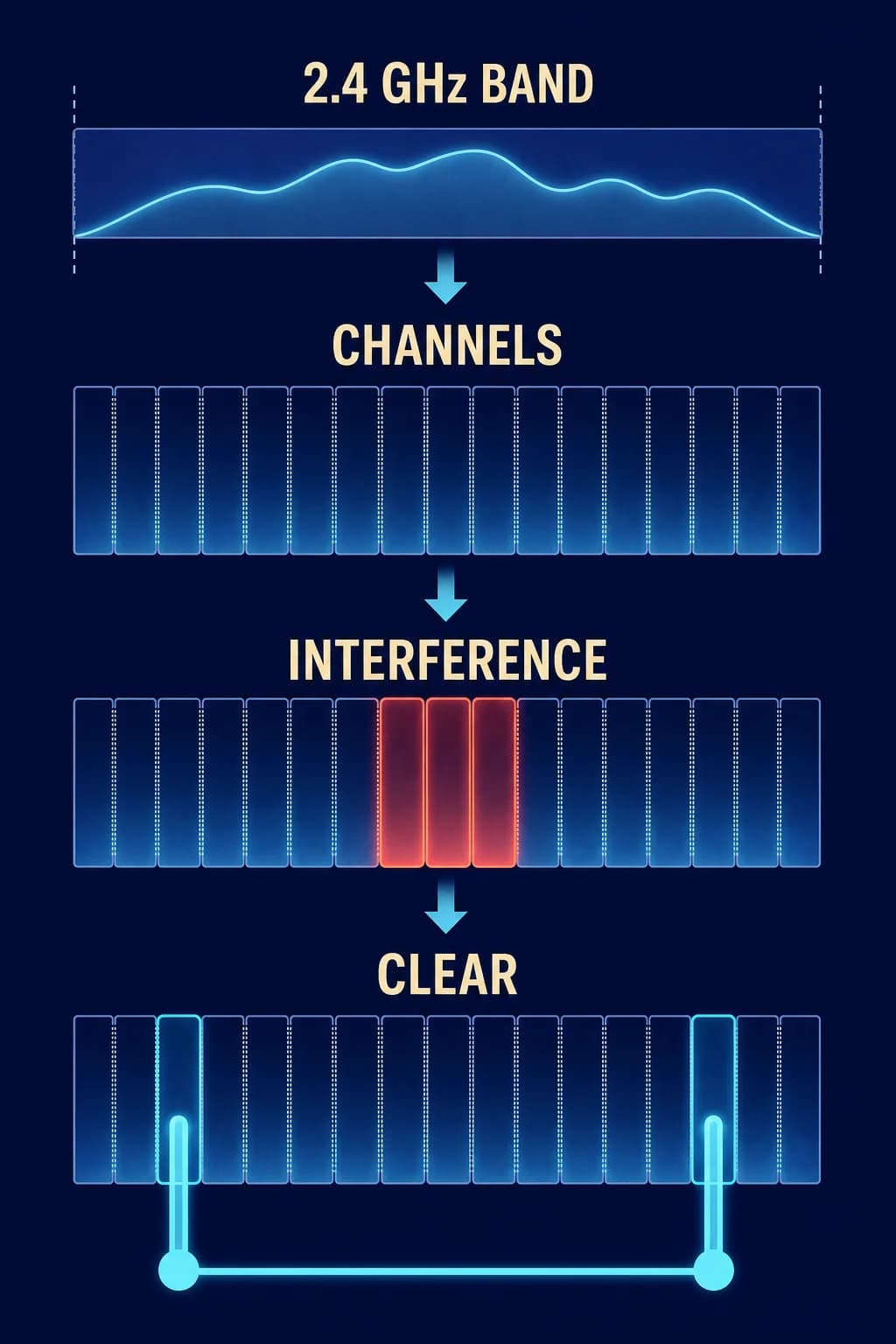
Bluetooth Low Energy operates in the crowded 2.4 GHz industrial, scientific, and medical band. Instead of treating that band as one undivided pipe, it defines multiple narrow radio channels. Some advertising channels help devices announce and discover; connected devices exchange data across a larger set of data channels.
Wi-Fi, microwave ovens, and other Bluetooth links may occupy parts of the same spectrum at different moments. Narrow channels make interference more local: a burst that damages one frequency doesn't necessarily damage every other available place to communicate.
A wide shared radio band is divided into many narrow channel columns; interference occupies only a few columns while other channels remain clear for a generic radio link. End the path at two plain geometric endpoint dots, with no Bluetooth rune, wireless icon, logo, or brand symbol.
Page 2 of 3
Both Ends Follow the Same Hop
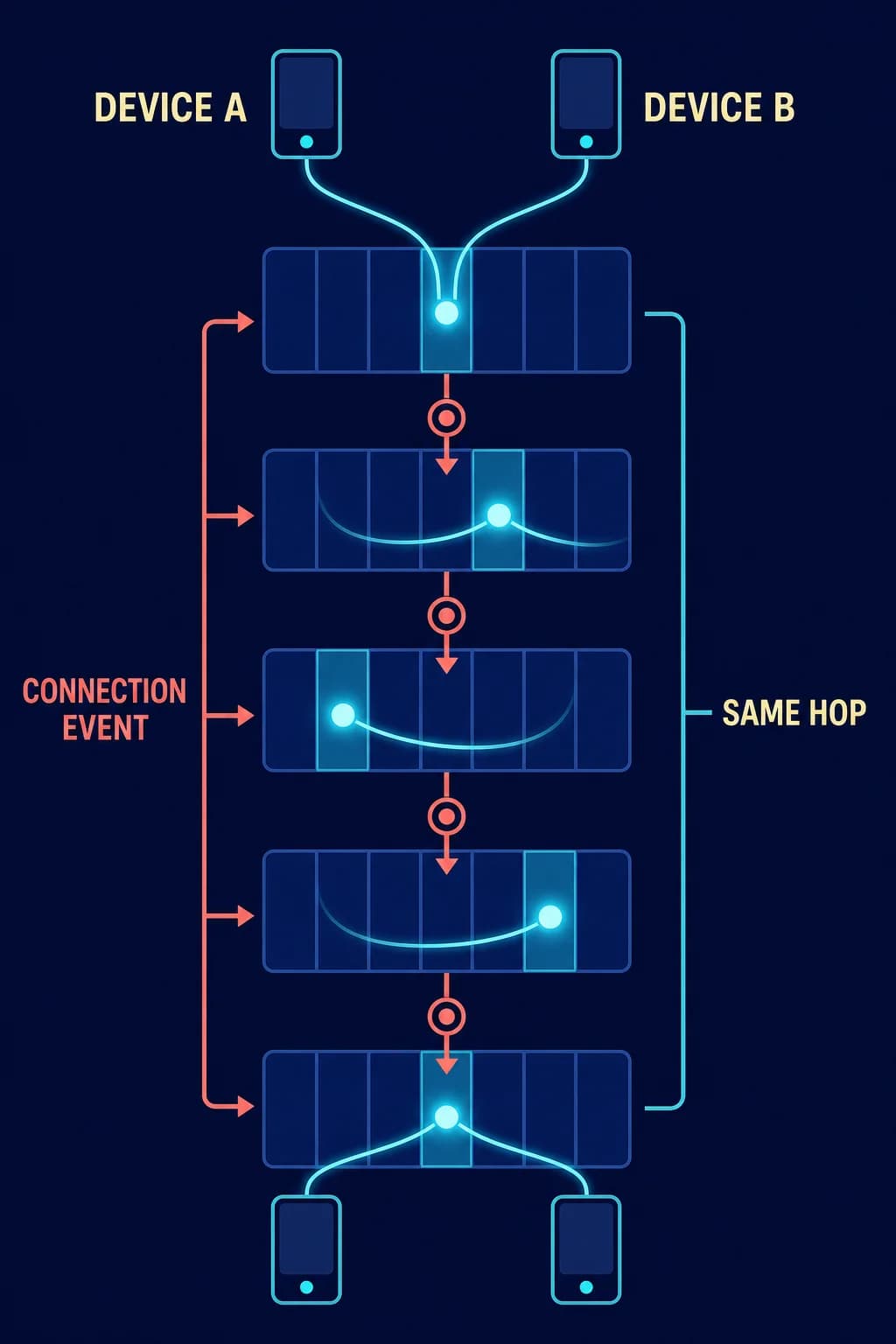
Once connected, the two devices share timing and channel-selection rules. At each connection event they calculate the same next data channel, tune there, exchange packets, and later move again. The hop sequence isn't a transmitter fleeing while the receiver searches blindly; both ends make the same deterministic choice from shared connection state.
Moving across frequency reduces the chance that one persistent interferer ruins every exchange. Timing is just as important as frequency: arriving on the right channel at the wrong connection event is still a missed conversation.
Two synchronized devices move together through a sequence of channel columns over successive connection events, always landing on the same frequency at the same time.
Page 3 of 3
Bad Channels Can Leave the Route
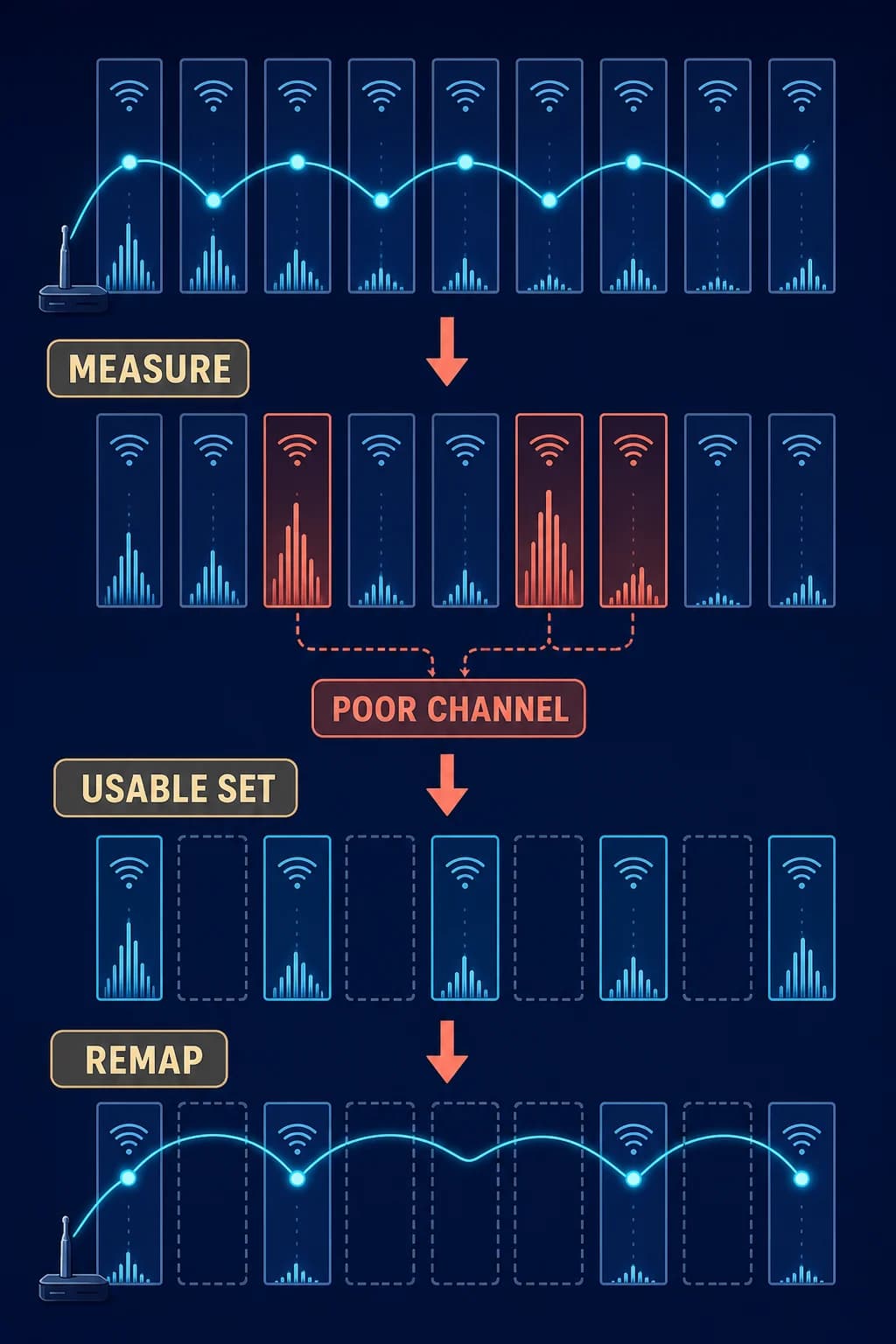
Adaptive frequency hopping adds feedback. A controller can classify channels as usable or poor based on observed performance and other information. The channel-selection process then remaps choices away from channels marked bad while continuing to hop among the usable set.
Classification must change as the radio environment changes; a channel blocked now may be clear later. This doesn't make Bluetooth invisible to interference, and a very crowded band can still reduce throughput or disconnect a link. It does turn one fixed vulnerable frequency into a moving, revisable route through the spectrum.
A hopping route first visits all channel columns, then a feedback map marks interfered columns as poor and redirects later hops through the remaining usable channels.
Key takeaways
A narrow interferer may affect only part of the available band
Both ends compute the same channel for each connection event
Adaptive maps steer later hops away from poor channels
Check your understanding
Why does the receiver not have to search blindly for every hop?
Both devices calculate the same next channel from shared connection timing and state.
What makes adaptive hopping adaptive?
The usable-channel map changes in response to observed channel quality.
Does hopping guarantee an interference-free link?
No. It spreads risk, but a crowded or changing band can still disrupt communication.
Sources
These references were used to check the important factual claims in this edition.