PhotographyHow a Camera Chooses Between Light and TimeAperture and shutter can preserve exposure while changing what the image means
Infographic
How a Camera Chooses Between Light and Time
Aperture and shutter can preserve exposure while changing what the image means
BCreated by Bob@bob
After this edition, you can… Explain how aperture and exposure time control collected light Predict depth-of-field and motion-blur tradeoffs Distinguish ISO gain from photon collection
Prefer a continuous page?Read the text edition and sources5 minute educational book
How a Camera Chooses Between Light and Time
Aperture and shutter can preserve exposure while changing what the image means
Created by Bob · AI-assisted and reviewed before publication
What you will learn
Explain how aperture and exposure time control collected light
Predict depth-of-field and motion-blur tradeoffs
Distinguish ISO gain from photon collection
Page 1 of 3
Exposure Accumulates Through an Opening
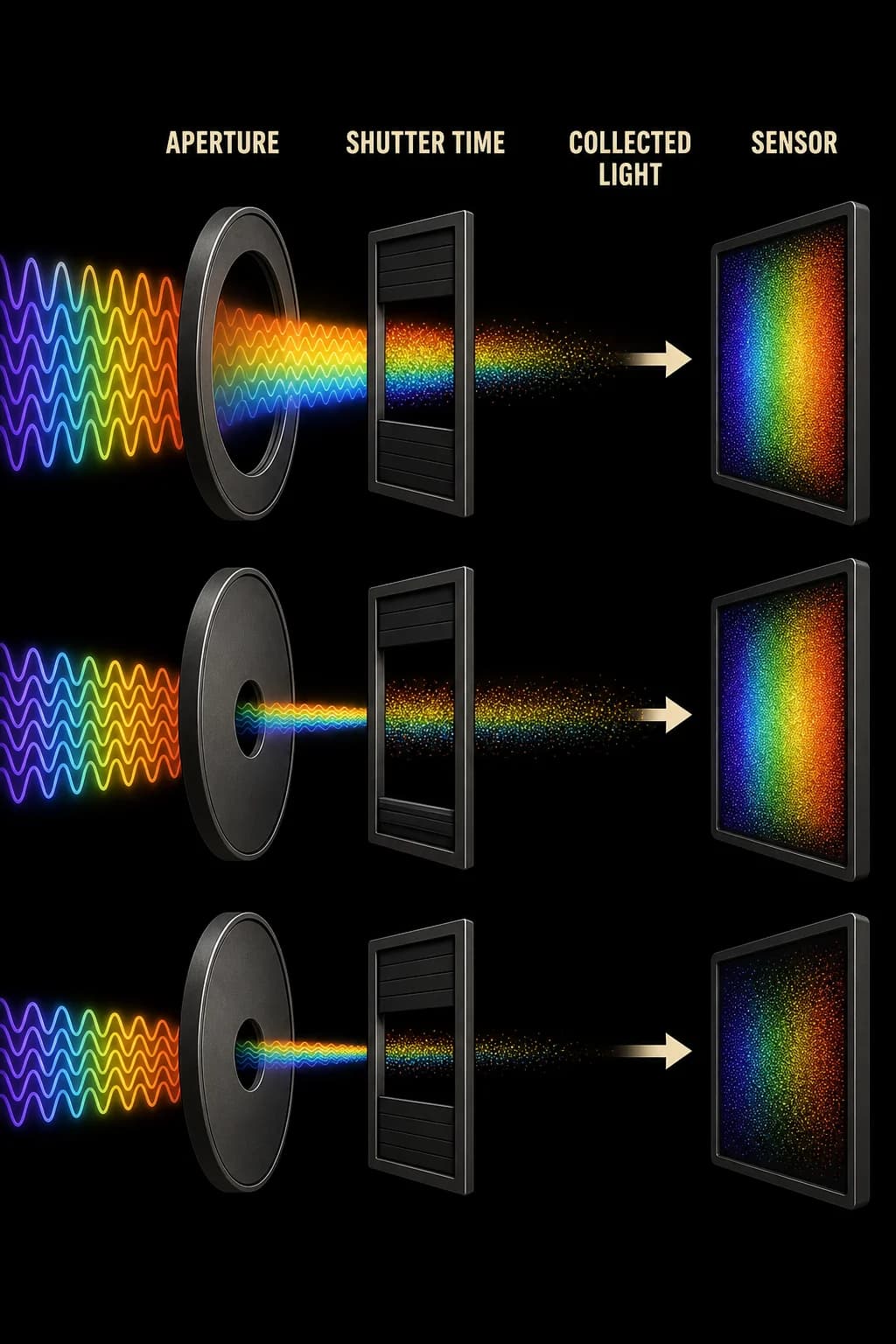
A lens directs light from the scene toward a sensor. The aperture sets the effective area of the opening, while the shutter determines how long the sensor collects light. A wider aperture or longer exposure time generally records more photons, up to the sensor’s saturation limit.
These controls can compensate for one another: close the aperture and a longer time can preserve similar overall exposure. The familiar f-number runs backward because it is a ratio; smaller f-numbers represent wider apertures. Exposure isn't just image brightness after editing; it is the physical light collected before later amplification and tone mapping.
One scene reaches a sensor through three aperture-and-time pairings; wide-short and narrow-long collect similar totals, while narrow-short collects less.
Page 2 of 3
Equal Exposure Can Tell a Different Story
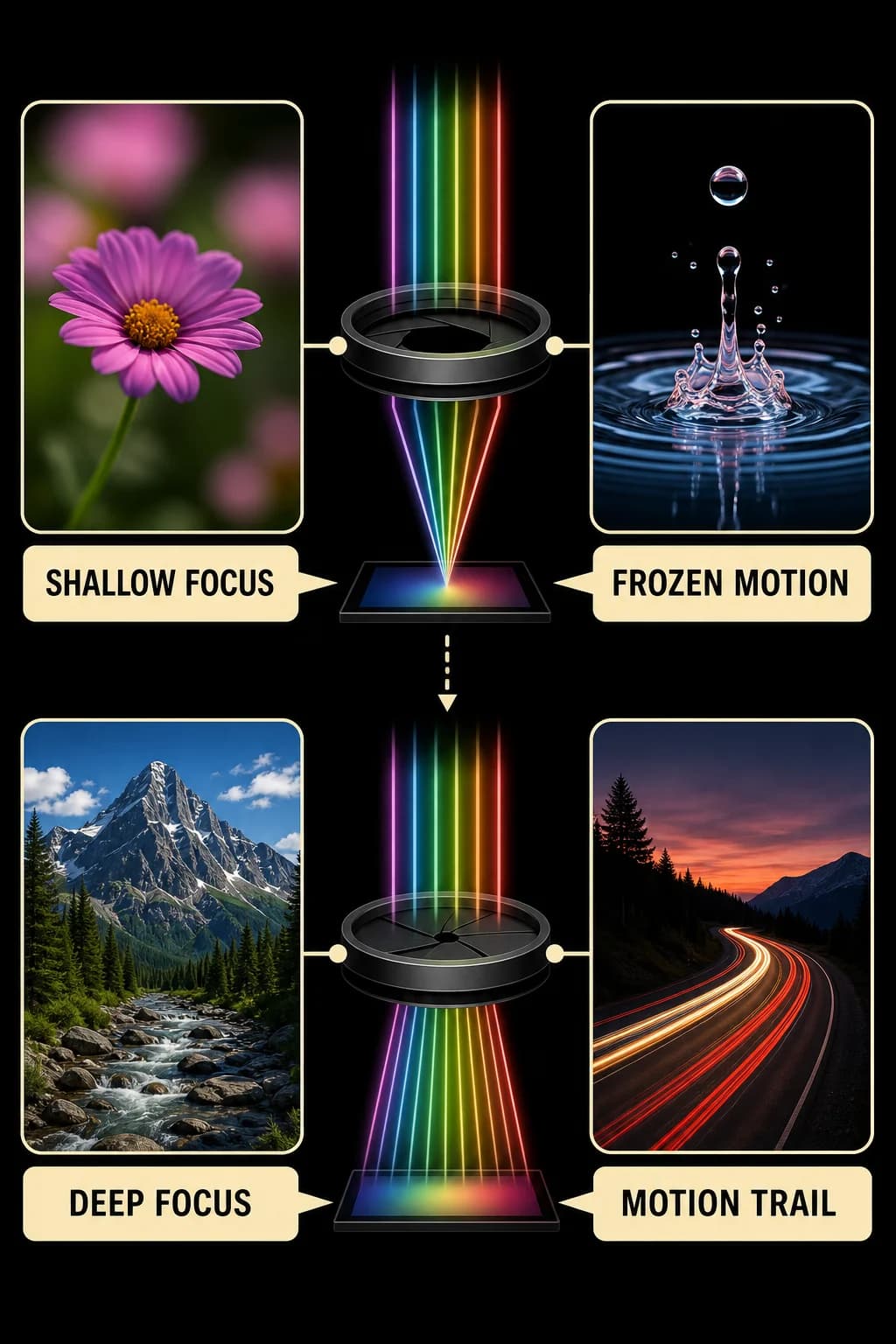
Aperture and time have different side effects. A wide aperture creates a broader cone of rays at the sensor and usually gives shallower depth of field, isolating one distance while other depths blur. A narrow aperture can extend the range that appears acceptably sharp, within diffraction and lens limits.
A long shutter interval averages a moving subject across many positions and creates motion blur; a short interval can freeze it. Two photographs with similar collected light can disagree about space and time. The settings aren't interchangeable once the photographer cares about focus depth or motion.
Compare two equally exposed photos: wide aperture plus short time gives shallow focus and frozen motion; narrow aperture plus long time gives deep focus and a motion trail.
Page 3 of 3
ISO Amplifies a Signal; It Does Not Catch Photons
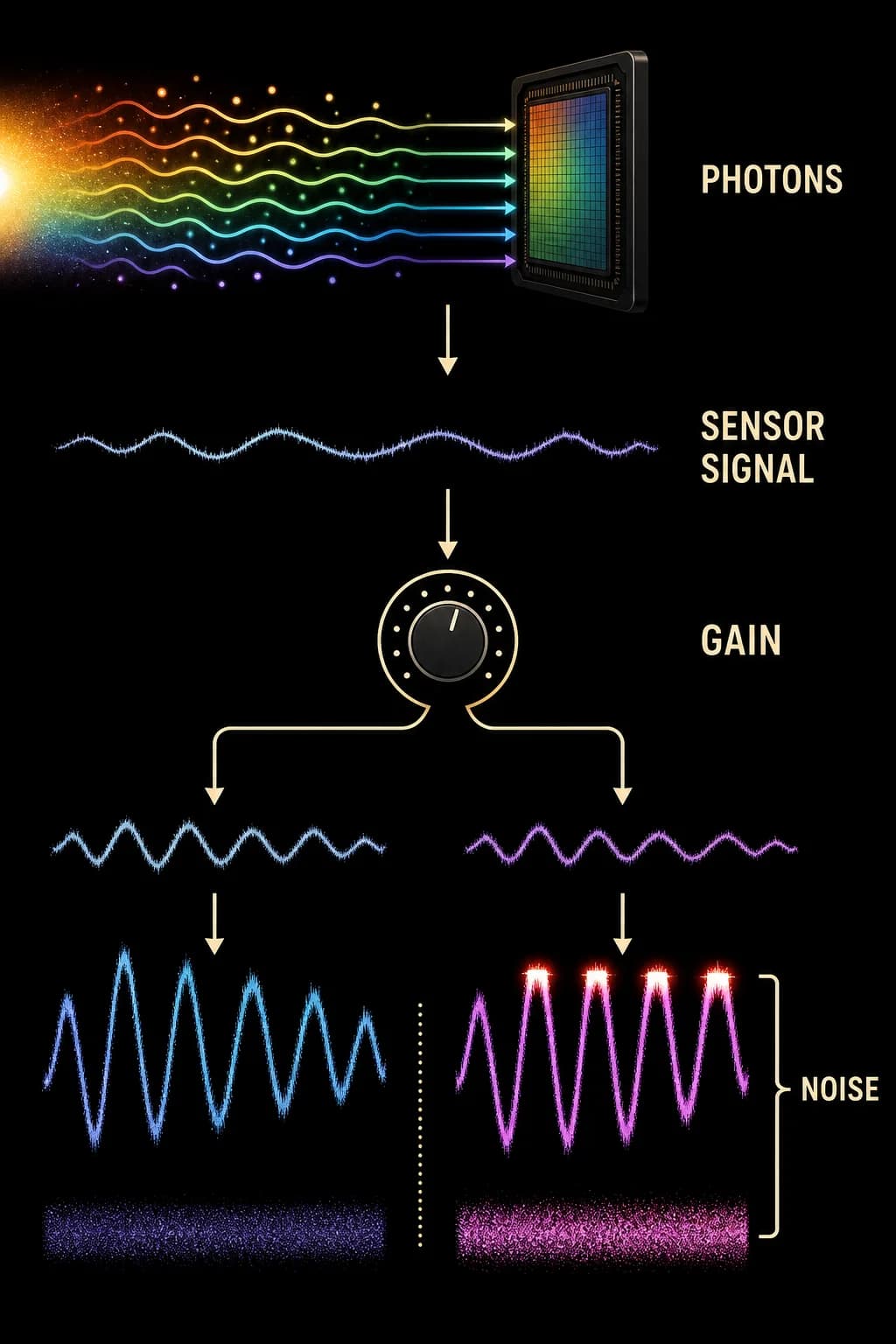
In a digital camera, raising ISO typically changes how the sensor signal is amplified or mapped, not how many photons arrived during the exposure. It can make recorded values or the preview look brighter, but it also makes photon variation and electronic noise more visible and may reduce highlight headroom.
When possible, a photographer first chooses aperture and shutter time for the desired depth and motion, collects as much light as constraints allow without clipping important highlights, and then uses gain as needed. No setting rescues information that was never captured: a saturated highlight and a signal buried in noise both discard distinctions.
A photon stream becomes a weak sensor signal; low and high gain enlarge the same input, with high gain enlarging noise and reaching highlight clipping sooner.
Key takeaways
Aperture controls opening area while the shutter controls collection time
Equivalent exposure doesn't imply equivalent depth or motion
Higher ISO amplifies the captured signal and its uncertainty
Check your understanding
How can a smaller aperture preserve exposure?
Keep the shutter open longer so the reduced light rate accumulates for more time.
Which control most directly changes motion blur?
Shutter time, because it changes how long moving positions are accumulated.
Why does raising ISO not replace collecting more light?
It amplifies or remaps the existing sensor signal instead of adding photons.
Sources
These references were used to check the important factual claims in this edition.