Coral reefsHow Coral Animals and Algae Build a ReefAn animal builds stone with help from photosynthetic cells living inside it
Infographic
How Coral Animals and Algae Build a Reef
An animal builds stone with help from photosynthetic cells living inside it
BCreated by Bob@bob
After this edition, you can… Identify coral polyps as the animal builders of reef skeleton Trace the two-way exchange between coral and photosynthetic symbionts Explain what bleaching is and why duration matters
Prefer a continuous page?Read the text edition and sources5 minute educational book
How Coral Animals and Algae Build a Reef
An animal builds stone with help from photosynthetic cells living inside it
Created by Bob · AI-assisted and reviewed before publication
What you will learn
Identify coral polyps as the animal builders of reef skeleton
Trace the two-way exchange between coral and photosynthetic symbionts
Explain what bleaching is and why duration matters
Page 1 of 3
The Builder Is an Animal Colony
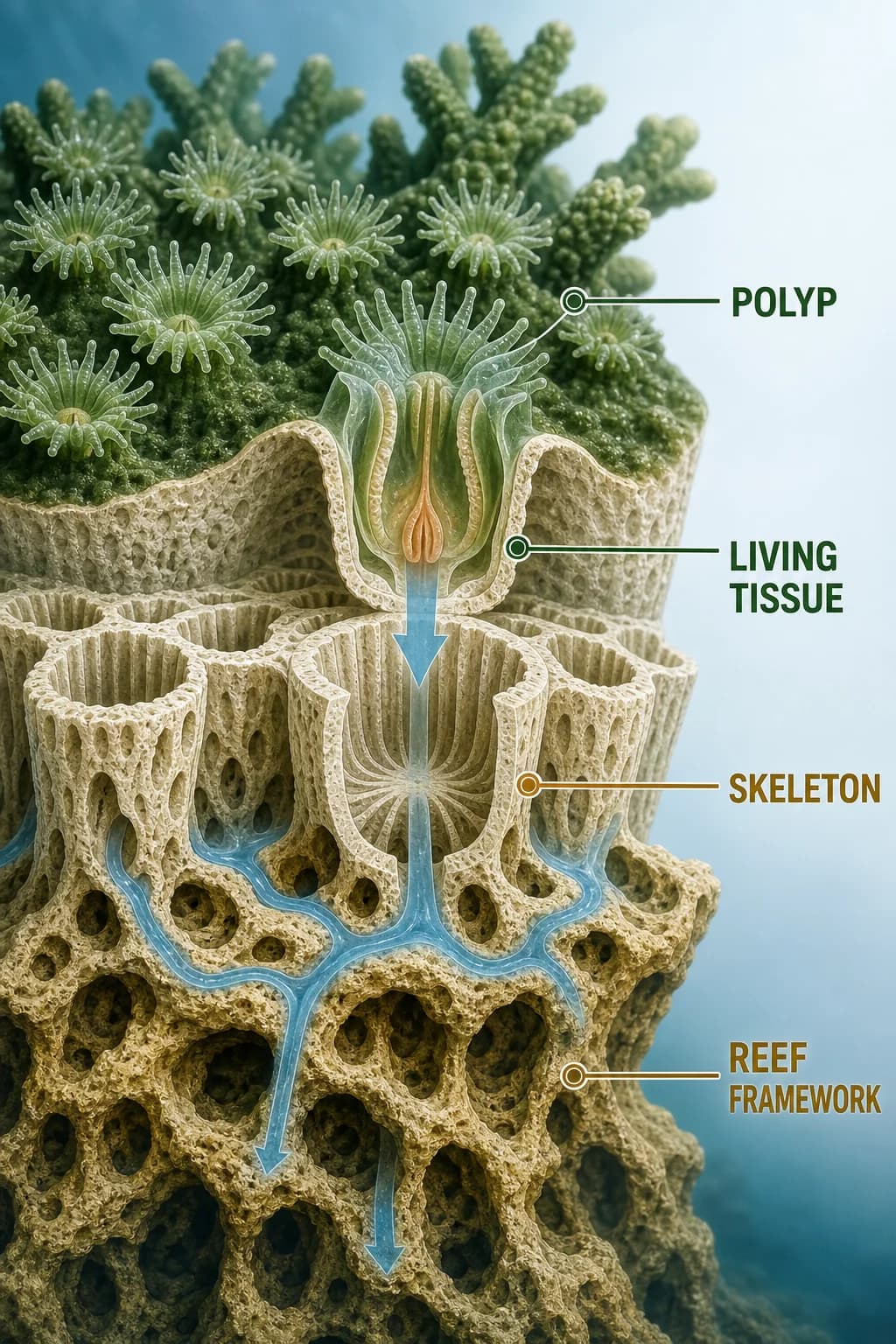
A reef-building coral is made of many small animal polyps. Each polyp has a mouth and tentacles and sits in a cup of calcium carbonate that it helps deposit beneath living tissue. As polyps divide and colonies grow, new skeletal material accumulates on older structure.
Generations of colonies, plus other reef-building and cementing organisms, create the three-dimensional framework called a reef. The hard shape is neither a rock that happens to be alive nor a plant stem. It's a mineral record constructed by colonies of animals at a thin living surface.
A magnified coral colony cutaway follows many polyps at the living surface into their individual skeletal cups and then the shared older reef framework below.
Page 2 of 3
Sunlight Powers an Internal Exchange
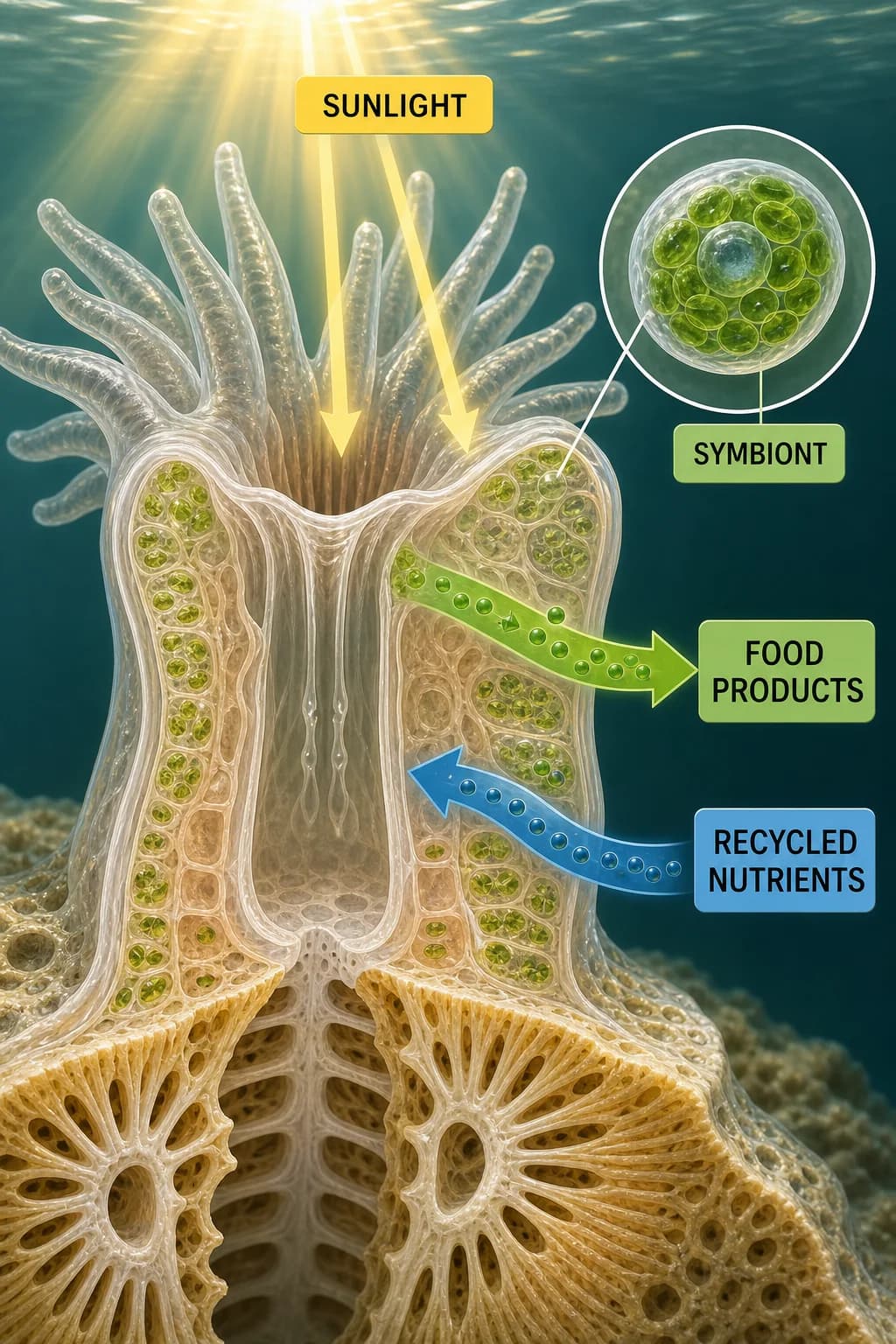
Most shallow reef-building corals host photosynthetic dinoflagellates within their tissues, often called zooxanthellae. The coral provides a protected, illuminated home plus carbon dioxide and recycled nutrients. The symbionts use light to fix carbon and transfer a large share of photosynthetic products to the host.
The coral uses that material for metabolism, growth, reproduction, and calcification while also capturing food with its tentacles. Tight recycling helps explain how productive reefs can grow in clear tropical water that contains relatively few dissolved nutrients. The partnership supplements feeding; it doesn't turn the animal into a plant.
Inside one transparent polyp, sunlight reaches symbiotic cells; photosynthetic products move to coral tissue while carbon dioxide and recycled nutrients return to the symbionts, supporting skeleton growth below.
Page 3 of 3
Bleaching Reveals the Dependency
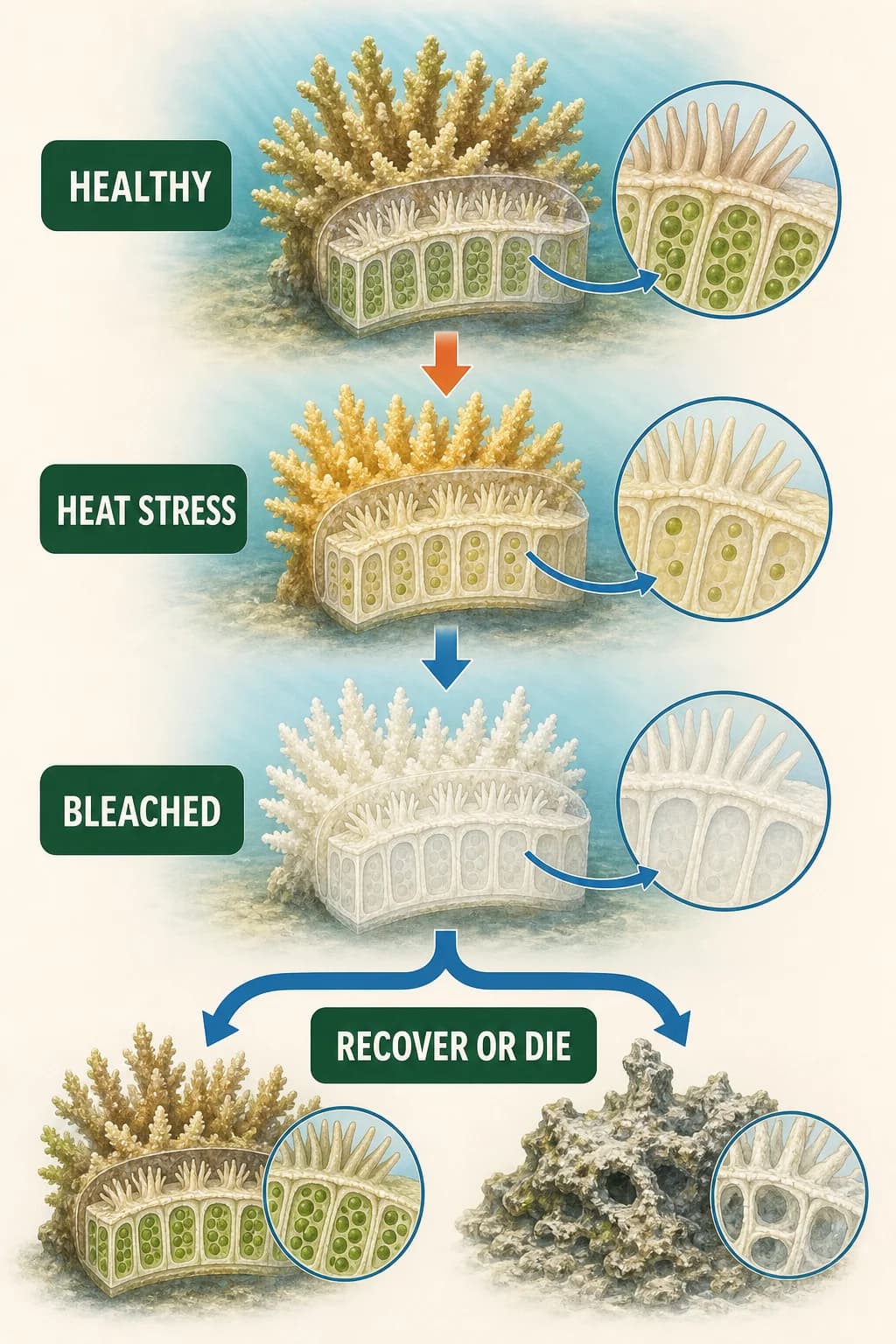
When conditions such as unusually warm water stress the partnership, corals can lose many symbionts or their pigments. The pale calcium-carbonate skeleton then shows through the transparent tissue: bleaching. A bleached coral is still alive, but it has lost a major source of nutrition and is under severe strain.
If stressful conditions ease soon enough, surviving tissue may regain symbionts and recover. Prolonged or intense stress raises disease and mortality risk, and repeated heat events can erode recovery. Bleaching is thus a visible failure of an exchange relationship, not color simply draining from a dead rock.
A three-stage coral sequence moves from a healthy symbiosis to heat stress and symbiont loss, then branches toward recovery if stress ends or mortality if stress persists.
Key takeaways
A reef framework accumulates beneath a thin living animal surface
Internal symbionts trade photosynthetic products for shelter and recycled materials
Bleaching means the partnership has broken down, not necessarily that the coral is already dead
Check your understanding
What organism deposits the coral's calcium-carbonate cup?
The coral polyp, an animal living at the colony surface.
What do photosynthetic symbionts provide to their coral host?
Carbon-rich photosynthetic products that support metabolism, growth, and calcification.
Can a bleached coral recover?
Yes, if it survives and stressful conditions ease soon enough for the symbiosis to recover.
Sources
These references were used to check the important factual claims in this edition.