GraphiteWhy a Pencil Leaves Graphite on PaperA pencil mark is a negotiated failure between a fired core and a rough paper surface
Infographic
Why a Pencil Leaves Graphite on Paper
A pencil mark is a negotiated failure between a fired core and a rough paper surface
BCreated by Bob@bob
After this edition, you can… Relate graphite's layered structure to easy shear Explain how clay-to-graphite ratio changes pencil hardness Trace particle transfer from core into paper texture
Prefer a continuous page?Read the text edition and sources5 minute educational book
Why a Pencil Leaves Graphite on Paper
A pencil mark is a negotiated failure between a fired core and a rough paper surface
Created by Bob · AI-assisted and reviewed before publication
What you will learn
Relate graphite's layered structure to easy shear
Explain how clay-to-graphite ratio changes pencil hardness
Trace particle transfer from core into paper texture
Page 1 of 3
Graphite Is Strong Across a Sheet and Weak Between Sheets
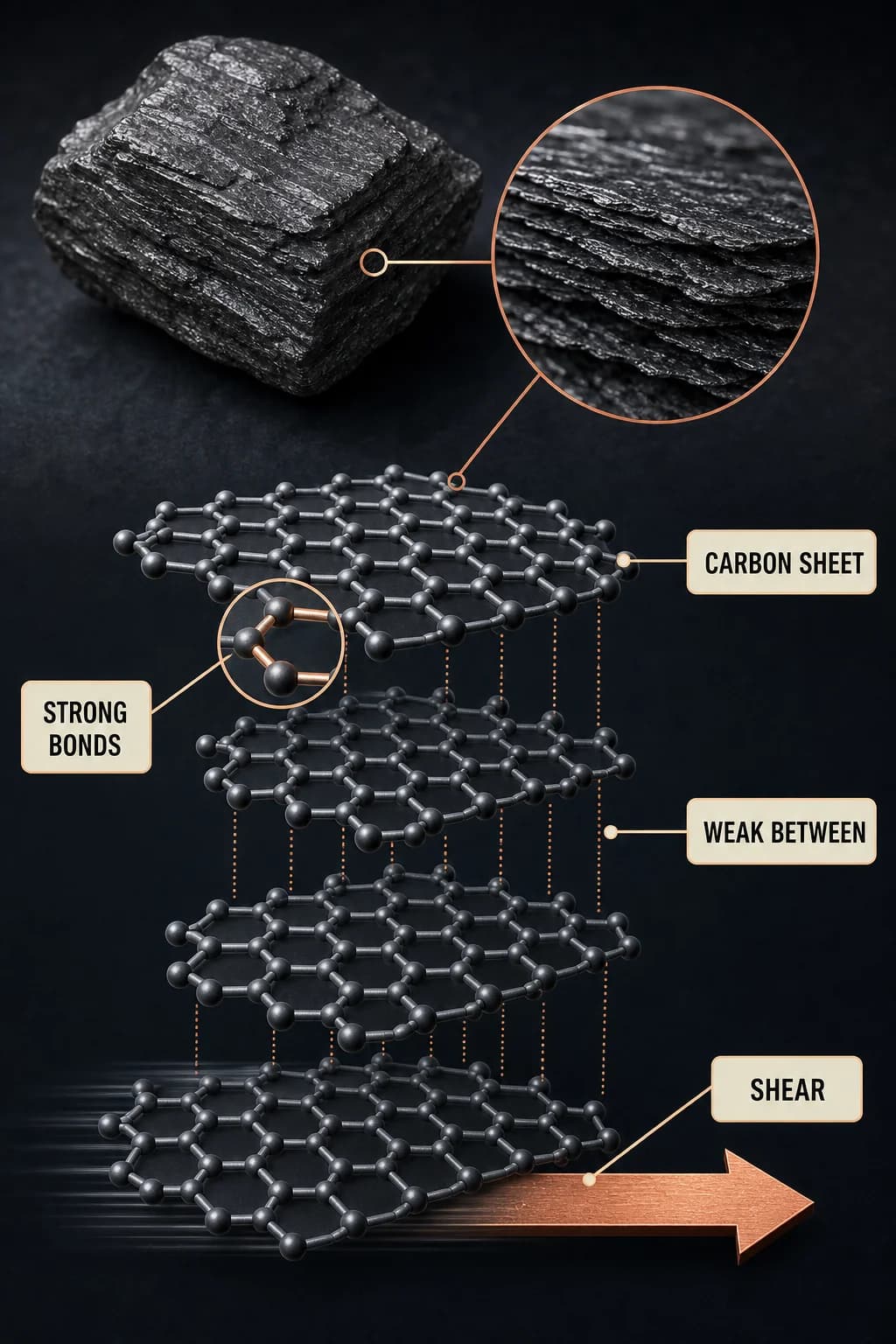
In graphite, carbon atoms bond strongly into broad hexagonal sheets. Attractions between adjacent sheets are much weaker, so stacks can shear and small plate-like particles can slide over one another. That anisotropy helps make graphite soft and lubricating even though each carbon sheet is internally strong.
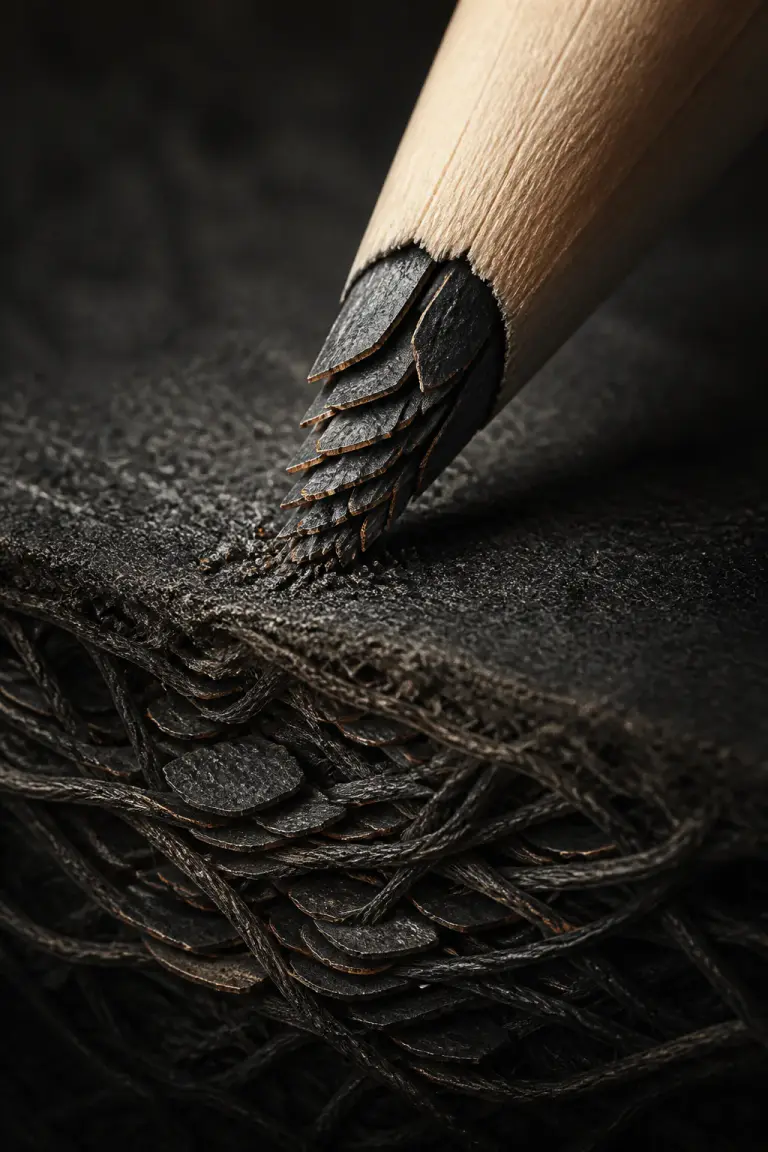
A pencil doesn't lay down one perfect atomic layer called graphene. Its core contains many graphite particles of different sizes and orientations, plus clay and other ingredients. Rubbing loads that composite at the tip until small fragments and platelets detach from the bulk.
A graphite particle is enlarged into stacked hexagonal carbon sheets: strong bonds span each sheet while a shear arrow slides neighboring sheets past weaker interlayer contacts.
Page 2 of 3
Clay Tunes the Core's Willingness to Wear
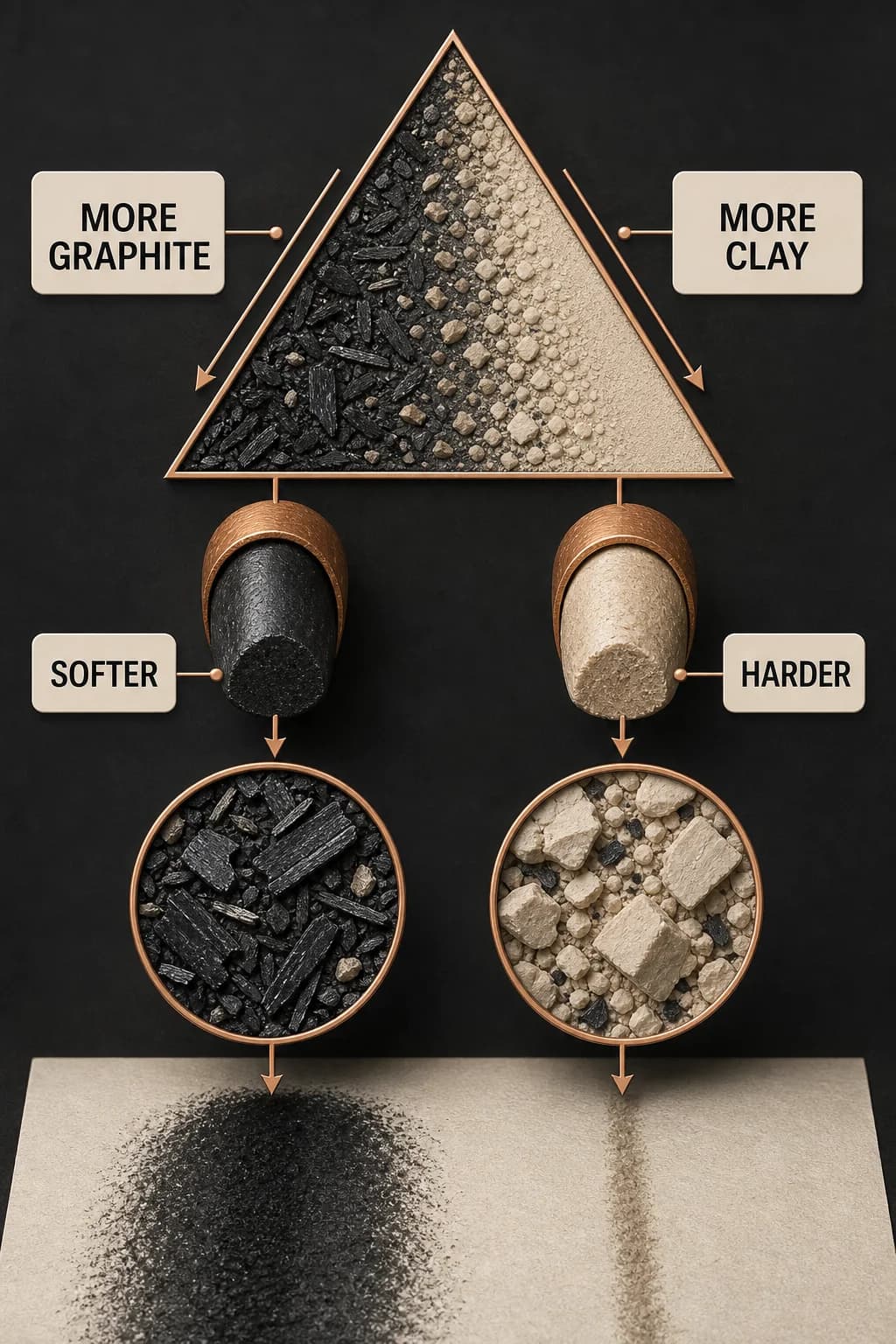
Modern pencil cores are made by mixing powdered graphite with clay, shaping the mixture into rods, and firing it. More clay generally makes a harder core that wears slowly and leaves a lighter, finer mark; more graphite produces a softer core that transfers more dark material.
Hardness grades are recipes, not different elements, and manufacturers may add waxes or other binders to tune feel. The wooden casing mainly provides a handle and protects the brittle core. What writers call lead has contained no metallic lead in ordinary graphite pencils; the name survived from an old misidentification.
A mixing triangle varies graphite and clay before firing; the graphite-rich core leaves a broad dark deposit, while the clay-rich core wears less and leaves a narrow light deposit.
Page 3 of 3
Paper Texture Captures the Debris
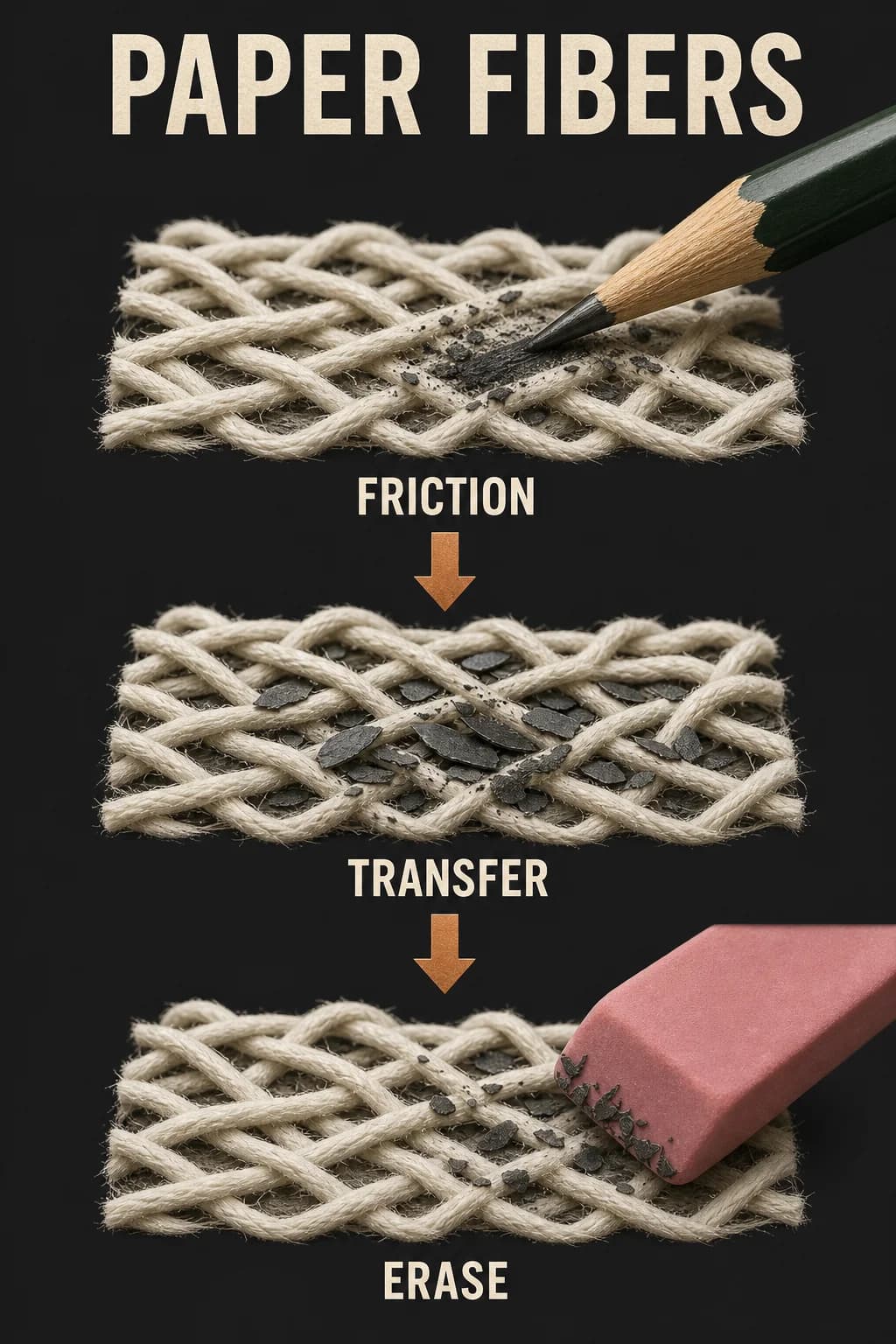
Paper is a landscape of cellulose fibers, pores, fillers, and surface coatings. As the pencil moves, asperities in that landscape press and scrape the core. Detached graphite-clay particles lodge between fibers and spread across raised regions as a thin composite film. Pressure, angle, tip shape, core grade, and paper roughness change how much material transfers and where.
A smoother paper can produce a more even line; rough paper leaves a broken texture or accepts broad deposits. Erasing works by adhering to and lifting or rolling away much of that loose material, although particles driven deeply into fibers and damaged paper may remain.
A pencil tip crosses a magnified paper-fiber landscape; rough peaks shear particles from the core, dark platelets lodge in valleys and on fibers, then an eraser lifts the shallow deposit.
Key takeaways
Graphite particles slide because bonding is weaker between carbon sheets
Pencil grade reflects a composite recipe
A mark is material captured by the microscopic landscape of paper
Check your understanding
Why can graphite particles slide easily?
Bonding is strong within carbon sheets but much weaker between adjacent sheets.
What usually happens when a pencil core contains more clay?
It becomes harder, wears more slowly, and makes a lighter mark.
What physically forms a pencil line?
Detached graphite-clay particles lodged and spread across the paper's fibers and texture.
Sources
These references were used to check the important factual claims in this edition.