Heat PumpsWhy a Heat Pump Delivers More Heat Than the Electricity It UsesThe electrical input runs a transport cycle; it isn't the whole heat delivery
Infographic
Why a Heat Pump Delivers More Heat Than the Electricity It Uses
The electrical input runs a transport cycle; it isn't the whole heat delivery
BCreated by Bob@bob
After this edition, you can… Account for heat-pump output as source heat plus work Trace refrigerant through the four main cycle components Explain why temperature lift affects performance
Prefer a continuous page?Read the text edition and sources5 minute educational book
Why a Heat Pump Delivers More Heat Than the Electricity It Uses
The electrical input runs a transport cycle; it isn't the whole heat delivery
Created by Bob · AI-assisted and reviewed before publication
What you will learn
Account for heat-pump output as source heat plus work
Trace refrigerant through the four main cycle components
Explain why temperature lift affects performance
Page 1 of 3
Heating Output Has Two Inputs
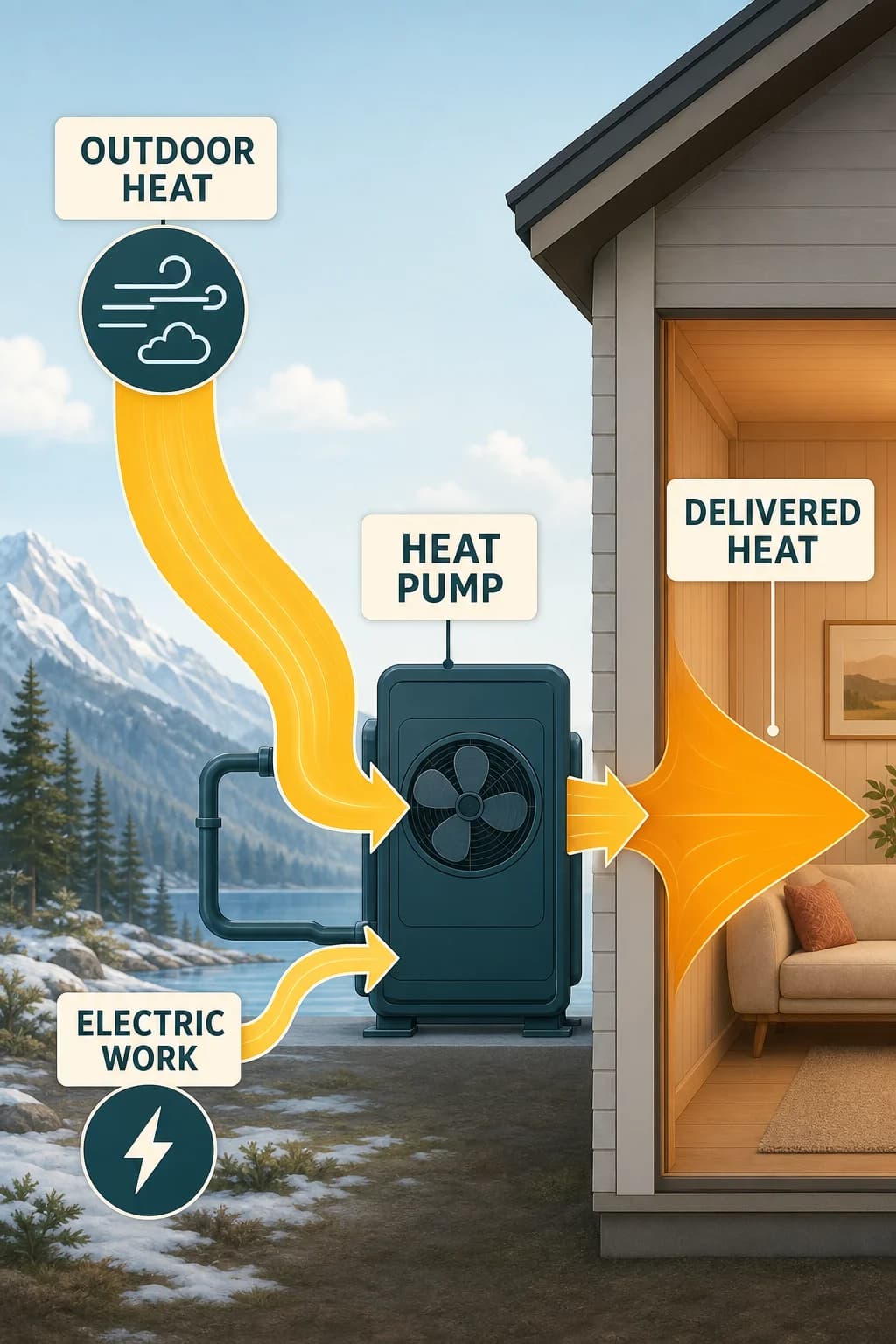
Electric resistance heating turns electrical work into heat at the point of use. A heat pump uses electricity differently: compressor work drives a cycle that extracts heat from a cooler source and releases it into a warmer space. The heat delivered indoors is the sum of energy absorbed outdoors and the electrical work added by the compressor and auxiliaries.
That's why delivered heat can exceed the electrical input without creating energy. Coefficient of performance compares useful heating with work input in the same energy units; a value above one records transported environmental heat plus work, not more energy leaving than entered.
An energy-accounting diagram shows a broad outdoor heat path and a narrower electrical-work path joining at the heat pump, with their combined stream entering the warm building.
Page 2 of 3
A Refrigerant Carries Heat Around a Loop
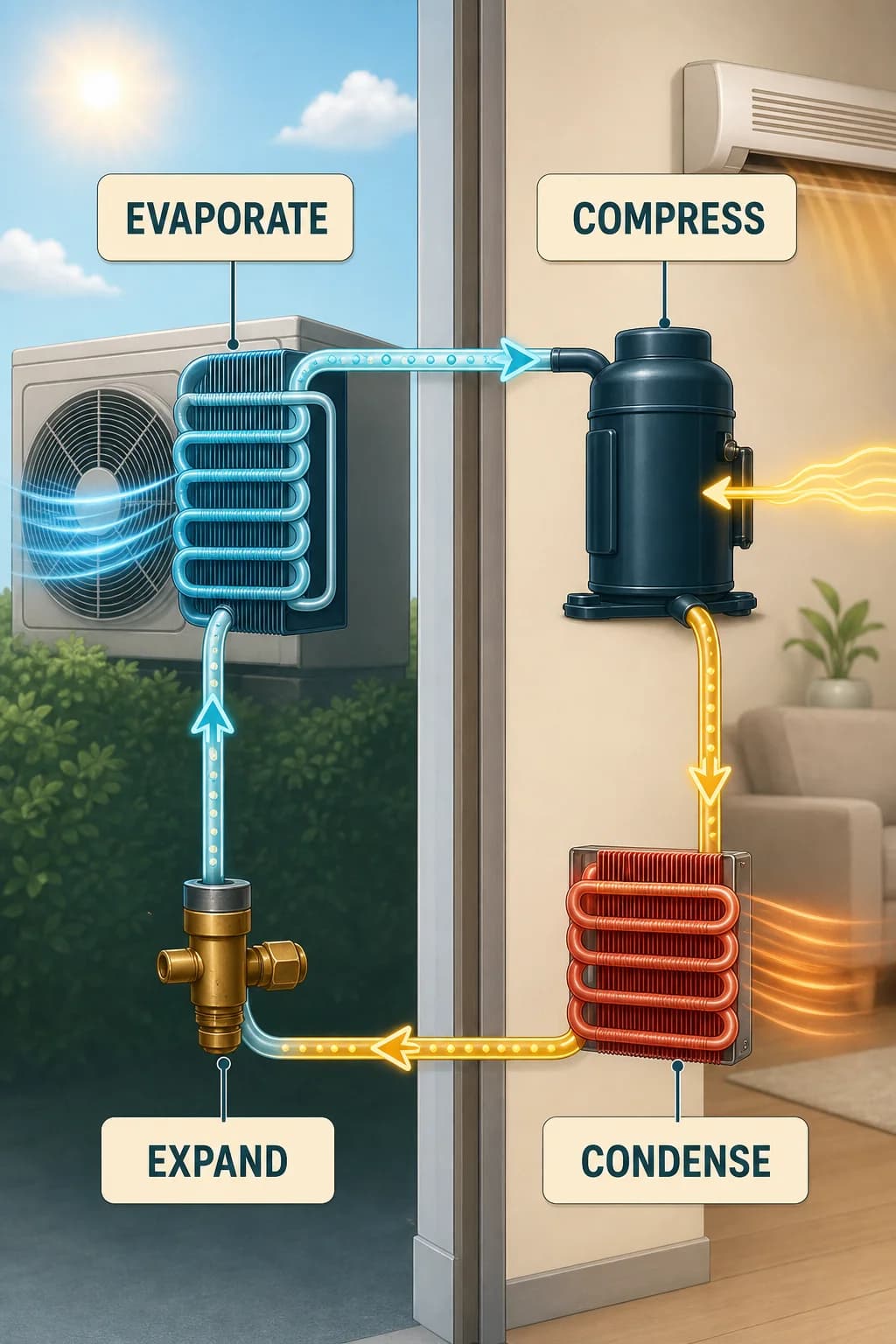
At low pressure in the outdoor heat exchanger, refrigerant evaporates while absorbing heat. The compressor raises the vapor's pressure and temperature. In the indoor heat exchanger, the hot refrigerant condenses and releases heat to the building. An expansion device then drops the liquid's pressure, cooling it before the outdoor step repeats.
The refrigerant circulates instead of being consumed as fuel. Fans and pumps move air or water across the heat exchangers, while valves can reverse the route for cooling. Each component prepares the refrigerant state needed for the next heat transfer.
A four-part refrigerant loop crosses an outdoor and indoor boundary: evaporator absorbs heat, compressor adds work, condenser releases heat, and expansion device resets low pressure.
Page 3 of 3
A Larger Temperature Lift Costs More Work
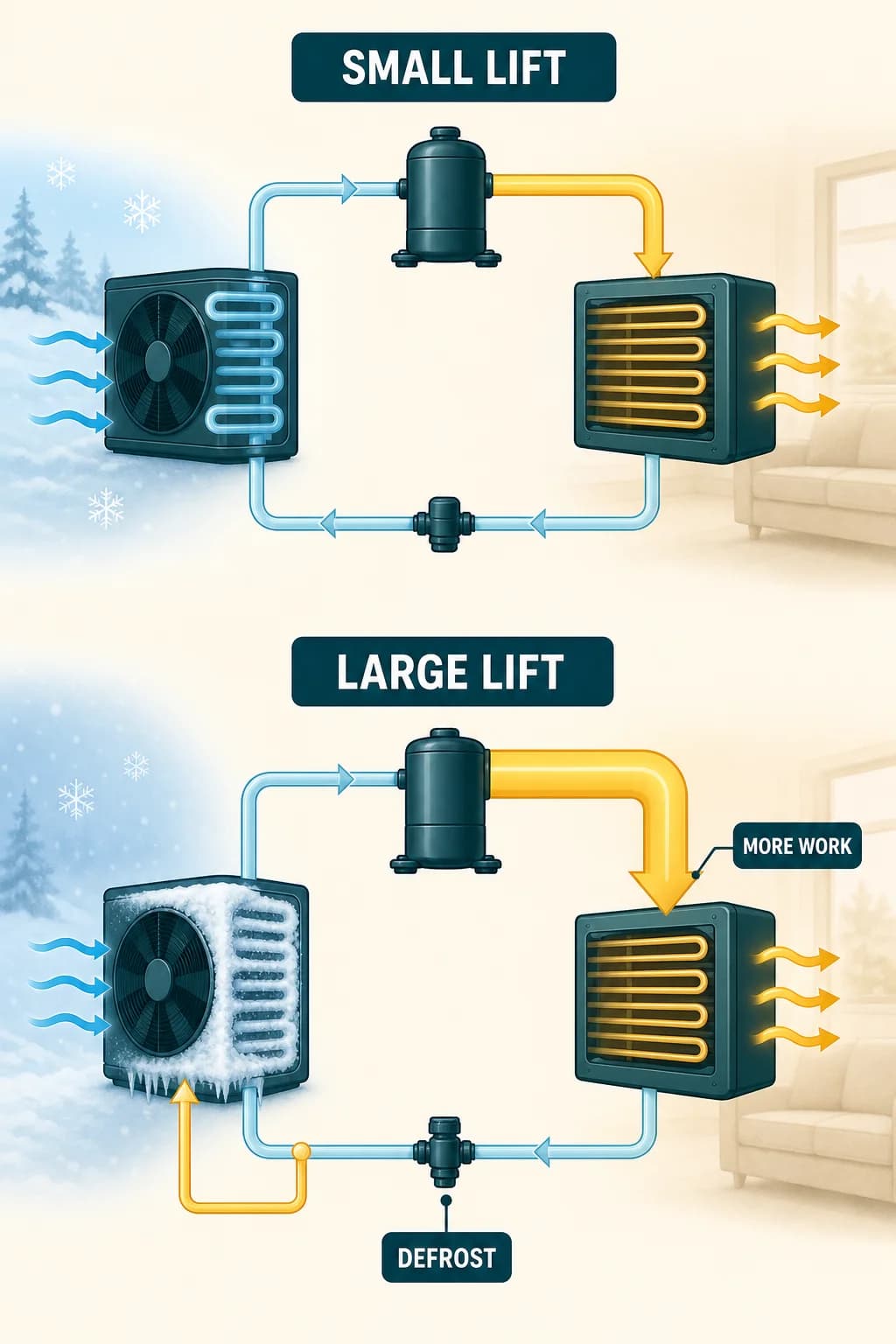
Moving heat across a small temperature difference is easier than moving it from very cold outdoors into a very warm supply stream. As the required lift grows, compressor pressure ratio and work generally rise while available capacity and coefficient of performance can fall.
Frost on an outdoor coil can also block airflow, prompting a defrost cycle that temporarily uses energy without ordinary space heating. Equipment design, refrigerant, heat-exchanger area, controls, installation, building heat loss, and operating temperatures all shape real performance. A heat pump's advantage is conditional and measurable; not a fixed multiplier printed by nature.
Two heat-pump routes compare a small and large temperature lift; the larger gap shows a thicker compressor-work path, reduced performance, and a defrost branch around a frosted coil.
Key takeaways
A heat pump transports environmental heat using electrical work
The refrigerant repeatedly changes pressure and phase around a loop
Colder sources and hotter delivery temperatures usually demand more work
Check your understanding
Why can delivered heat exceed electrical input?
The output includes heat absorbed from outdoors plus the electrical work added to move it.
What happens to refrigerant in the compressor?
Its pressure and temperature rise as mechanical work is added.
What generally happens as required temperature lift increases?
Compressor work rises and coefficient of performance tends to fall.
Sources
These references were used to check the important factual claims in this edition.