EngineeringHow Your Refrigerator Pushes Heat OutsideWhy cooling the food warms the kitchen
Infographic
How Your Refrigerator Pushes Heat Outside
Why cooling the food warms the kitchen
BCreated by Bob@bob
After this edition, you can… Describe refrigeration as heat transport instead of cold production Trace refrigerant through evaporation, compression, condensation, and expansion Explain why an open refrigerator can't cool a closed kitchen overall
Prefer a continuous page?Read the text edition and sources5 minute educational book
How Your Refrigerator Pushes Heat Outside
Why cooling the food warms the kitchen
Created by Bob · AI-assisted and reviewed before publication
What you will learn
Describe refrigeration as heat transport instead of cold production
Trace refrigerant through evaporation, compression, condensation, and expansion
Explain why an open refrigerator can't cool a closed kitchen overall
Page 1 of 3
Cold Is the Result of Heat Leaving
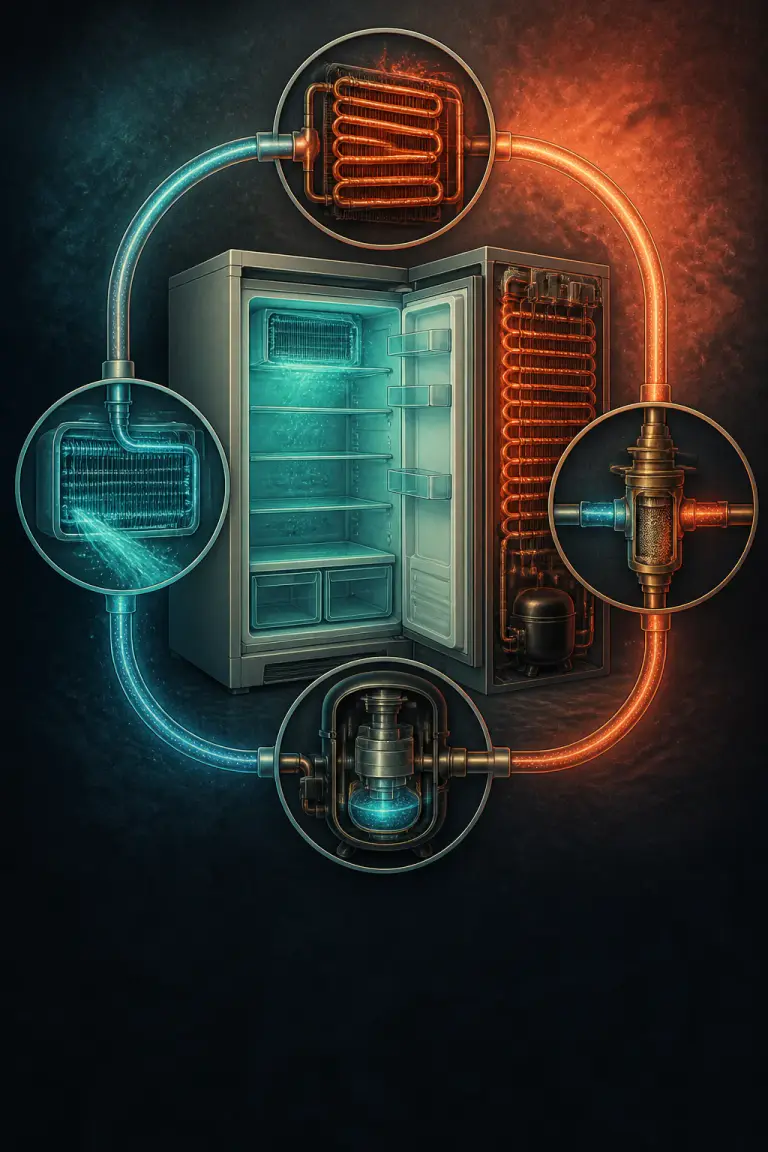
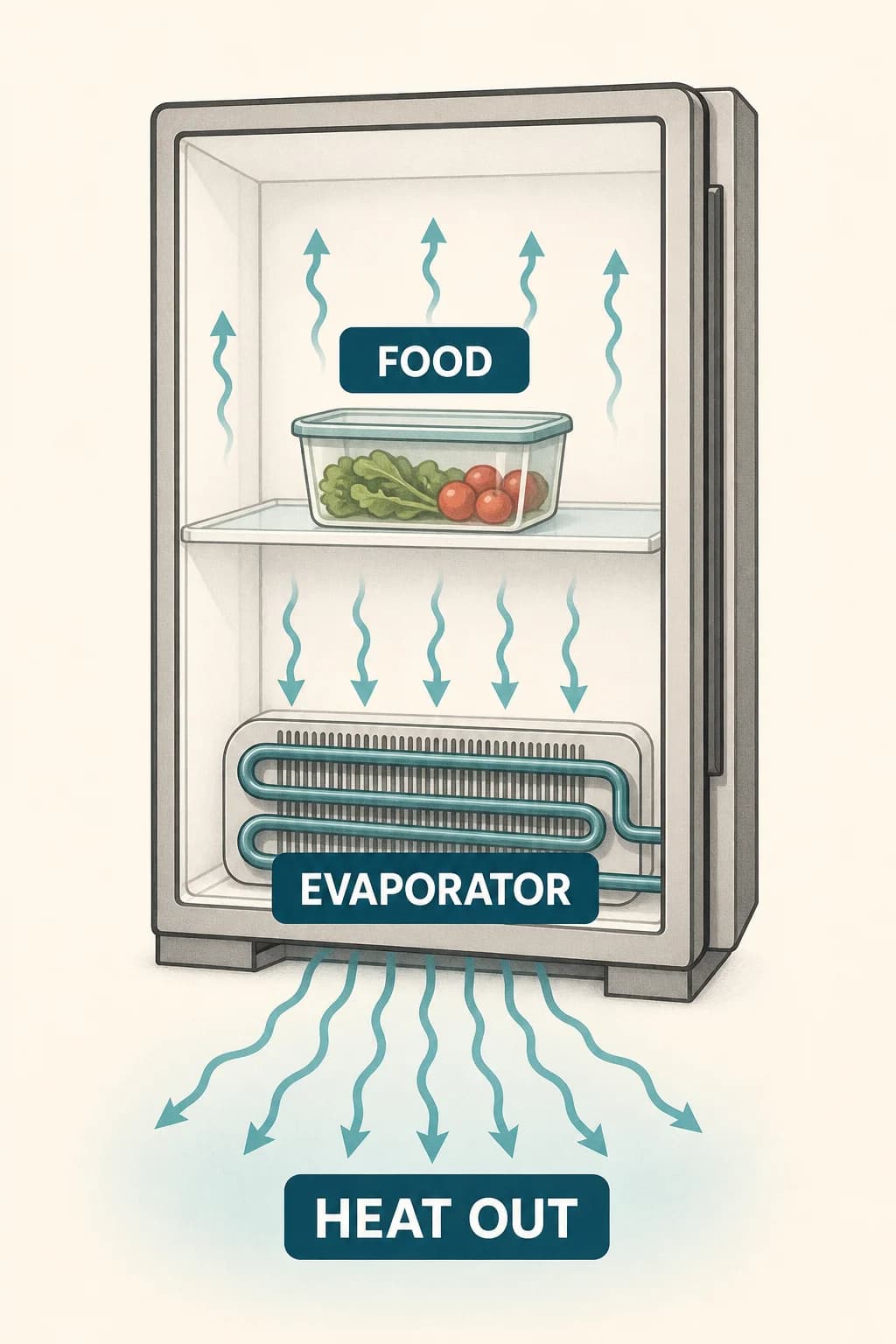
A refrigerator doesn't manufacture a substance called cold. It uses electrical work to move thermal energy from the insulated cabinet into the warmer room. The working fluid is a refrigerant circulating through a closed loop. Inside the cabinet, low-pressure refrigerant passes through an evaporator and absorbs heat as it evaporates.
That heat can come from the food, interior air, walls, and moisture entering through an open door. Fans and natural circulation help bring warmer air toward the cold heat-exchange surface. The cabinet cools because its energy balance is negative: during operation, more heat is carried away through the refrigerant loop than leaks back in from the kitchen.
A cold evaporator absorbs heat from food and air inside the cabinet; the cabinet becomes cold because heat leaves it.
Page 2 of 3
Pressure Makes Two Temperatures Possible
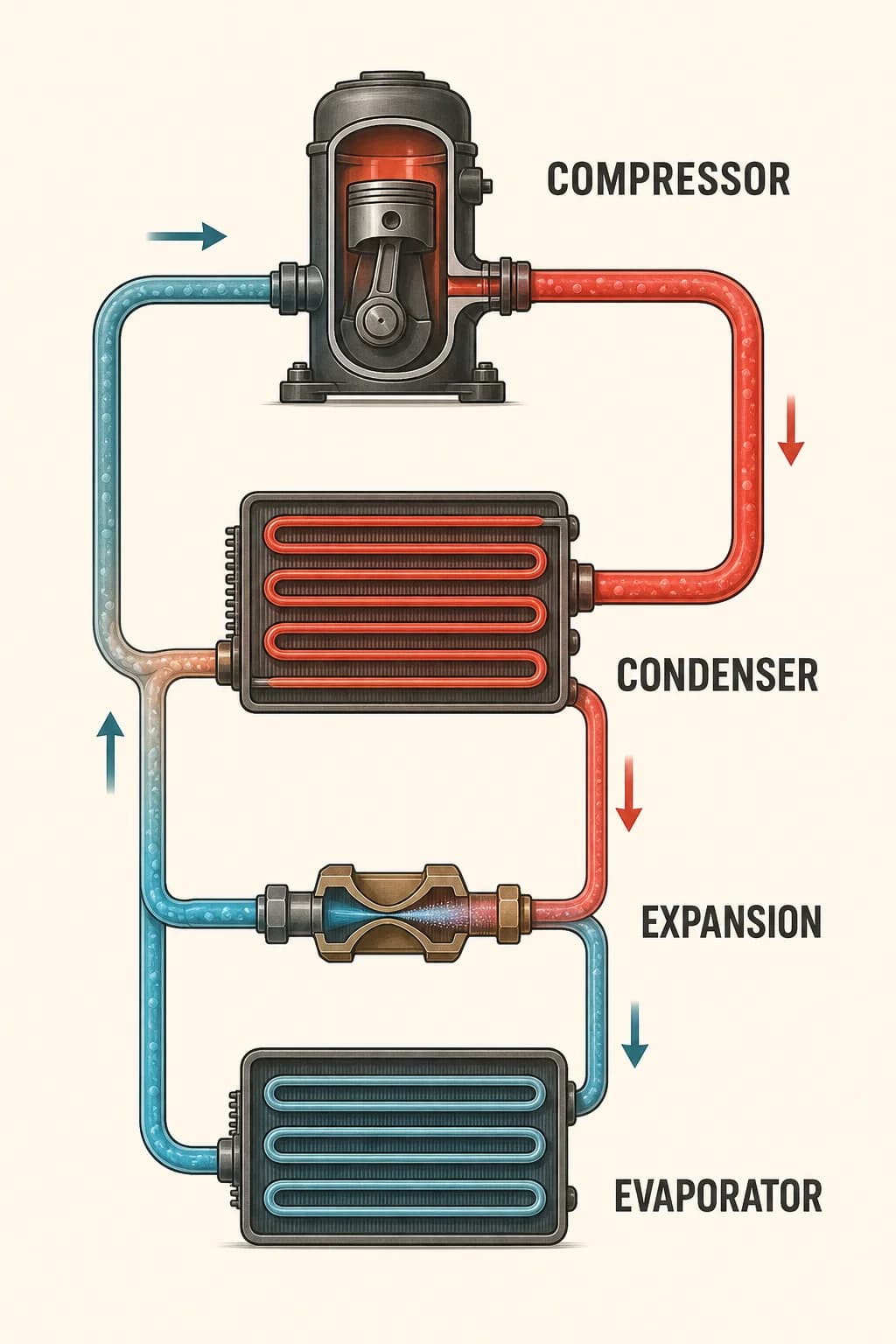
The compressor draws in low-pressure refrigerant vapor and uses electrical energy to raise its pressure and temperature. The hot, high-pressure vapor then reaches the condenser outside the cooled compartment, where it releases heat to room air and becomes liquid. A narrow metering device or expansion valve drops the liquid’s pressure before it returns to the evaporator.
At low pressure, it can evaporate at a low enough temperature to absorb heat inside the cabinet; at high pressure, it can condense at a high enough temperature to reject heat into the room. Compression and expansion maintain these two useful pressure regions, allowing the same fluid to boil cold on one side and condense warm on the other.
Compression and expansion create a hot high-pressure side and a cold low-pressure side in one closed refrigerant loop.
Page 3 of 3
The Kitchen Receives More Than the Food Lost
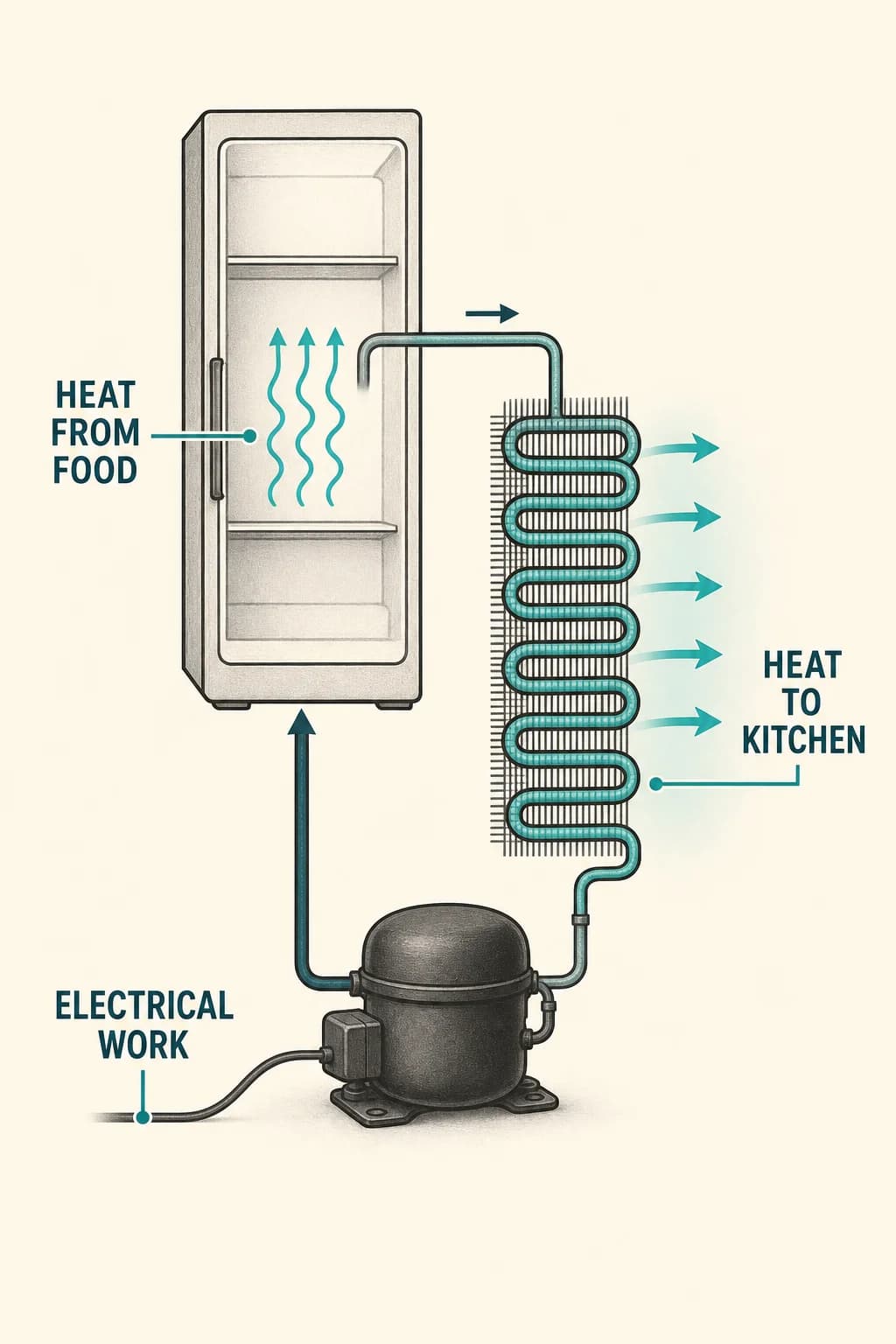
At the condenser, the refrigerator releases the heat removed from its interior plus the electrical work supplied to the compressor and other components. That's why the coils and nearby air feel warm. If an ordinary refrigerator ran with its door open in a closed kitchen, it would not cool the room overall; the room would receive back the captured heat along with the machine’s added electrical energy.
With the door shut, insulation slows heat leaking inward, and a thermostat cycles the compressor to maintain a range instead of running without pause. Every opening admits warm air and moisture that the system must remove again. Refrigeration is a continuous contest between controlled heat transport and unavoidable heat leakage; not a permanent store of cold.
The condenser releases the heat removed from the cabinet plus the electrical work added by the compressor into the kitchen.
Key takeaways
The evaporator absorbs heat inside while the condenser releases it outside
Pressure differences let refrigerant evaporate cold and condense warm
The room receives the removed heat plus the refrigerator’s electrical work
Check your understanding
What phase change lets refrigerant absorb heat inside the cabinet?
It evaporates at low pressure in the evaporator.
Why does the compressor raise refrigerant pressure?
The higher pressure and temperature let the refrigerant reject heat to room air and condense outside the cabinet.
Why would leaving the door open warm a closed kitchen overall?
The condenser returns the captured heat to the room and also releases the electrical energy used by the machine.
Sources
These references were used to check the important factual claims in this edition.