Food scienceWhy Food Cooks Faster Under PressureHow pressure lets water cook at a higher temperature
Infographic
Why Food Cooks Faster Under Pressure
How pressure lets water cook at a higher temperature
BCreated by Bob@bob
After this edition, you can… Explain why pressure changes water’s boiling temperature Identify why hotter moist cooking can speed food transformation Describe the regulator as a control that holds a designed operating condition
Prefer a continuous page?Read the text edition and sources5 minute educational book
Why Food Cooks Faster Under Pressure
How pressure lets water cook at a higher temperature
Created by Bob · AI-assisted and reviewed before publication
What you will learn
Explain why pressure changes water’s boiling temperature
Identify why hotter moist cooking can speed food transformation
Describe the regulator as a control that holds a designed operating condition
Page 1 of 3
Boiling Depends on the Air Above
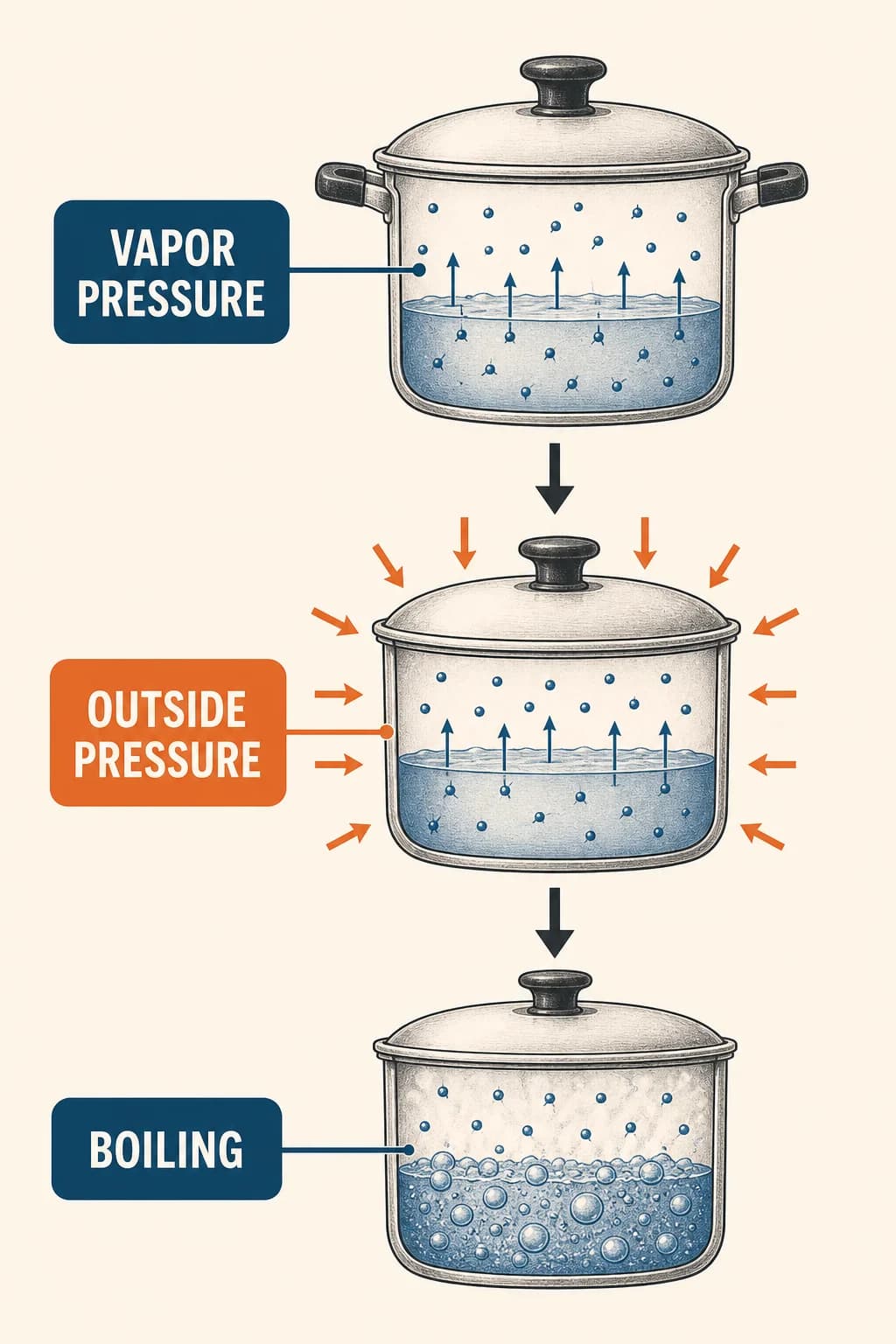
A liquid boils when bubbles of its vapor can grow throughout it instead of collapsing under the pressure around them. At ordinary sea-level pressure, water reaches that condition near 100 degrees Celsius. At high altitude, lower atmospheric pressure lets it boil at a lower temperature. A pressure cooker deliberately moves the other way.
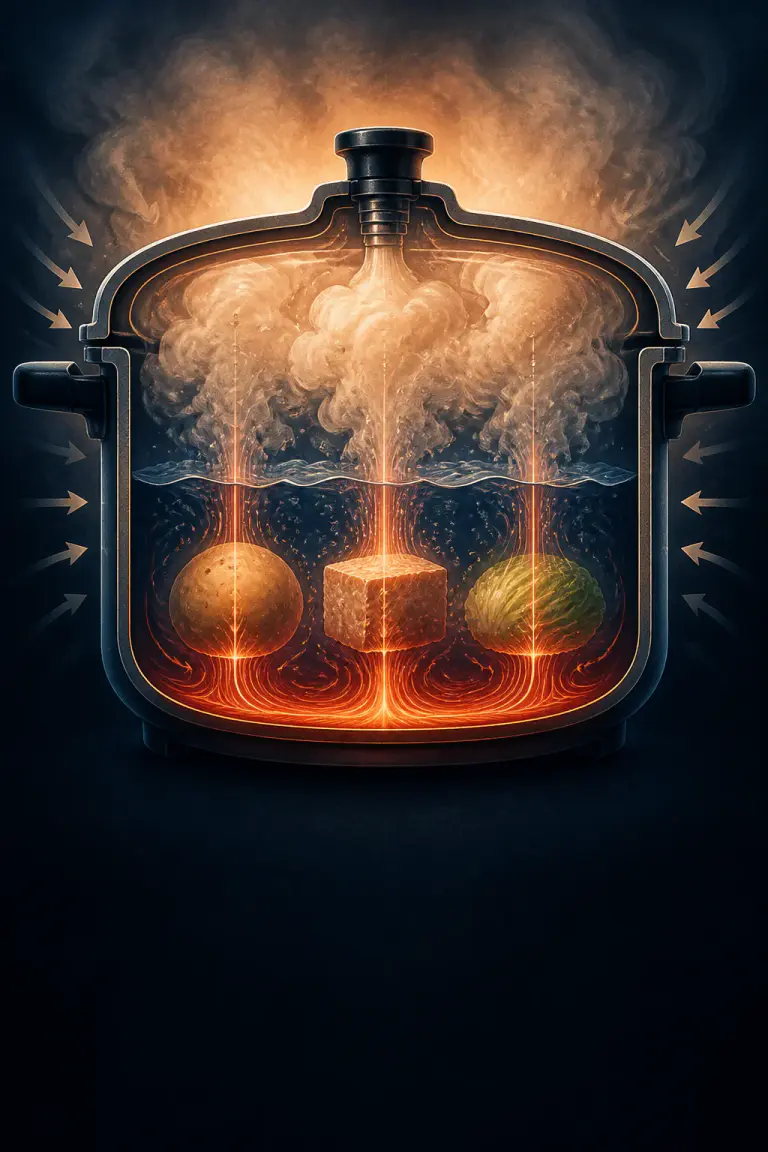
Water turns to steam inside a mostly sealed vessel, and the accumulating vapor raises the internal pressure. Under that greater pressure, liquid water must reach a higher temperature before vapor bubbles can persist. The burner has not changed what water is; the cooker has changed the boundary condition that determines when boiling can happen.
Water boils when vapor pressure matches the surrounding pressure, so a sealed pot at higher pressure reaches a higher boiling temperature.
Page 2 of 3
Hotter Water Speeds the Slow Parts
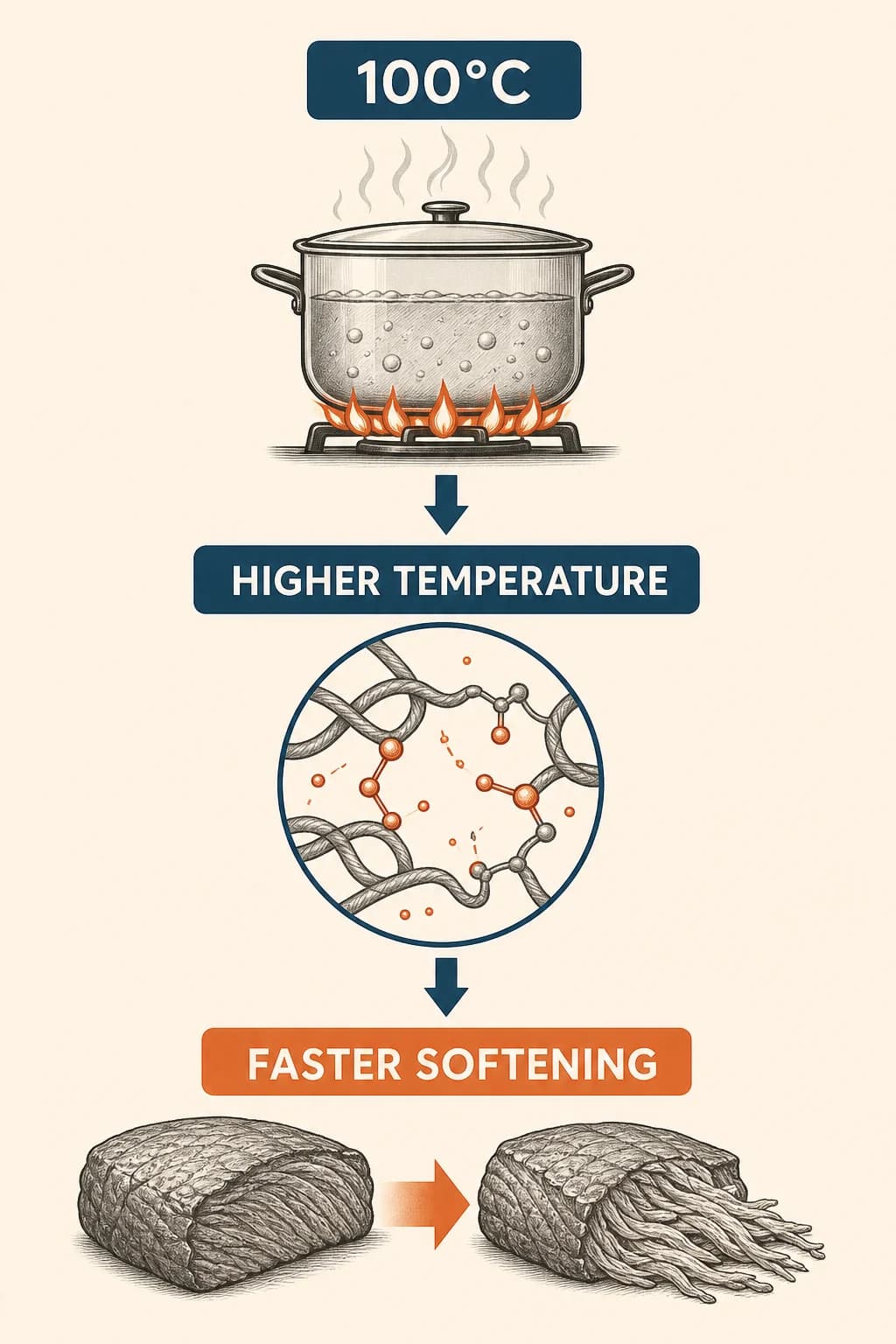
Once the cooker reaches its regulated pressure, its water and steam can be hotter than an open simmer. Higher temperature speeds many processes involved in cooking: heat moves into the food against a larger temperature difference, starches hydrate and soften, and connective structures change more rapidly. The pressure itself isn't squeezing flavor through solid food like a hydraulic press.
Its central job is to permit a hotter moist cooking environment without letting the water simply boil away at the usual temperature. Steam that condenses on a cooler food surface also releases energy there. The result is faster moist heating, especially for dense foods whose transformation would otherwise require a long simmer.
A higher cooking temperature speeds heat-driven softening reactions, shortening the time needed for tough foods to become tender.
Page 3 of 3
The System Works by Holding a Limit
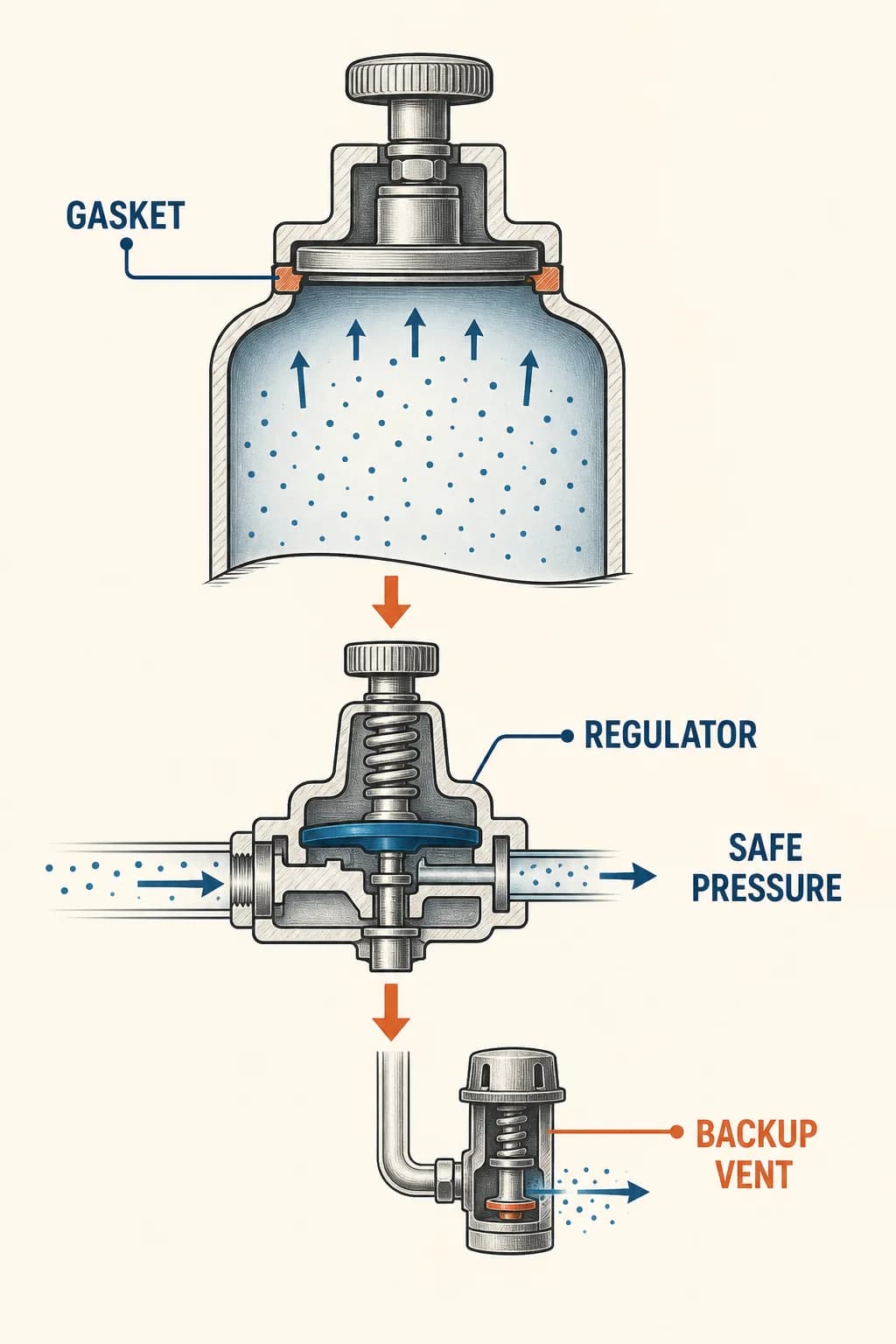
A pressure cooker isn't intended to trap pressure without bound. Its regulator releases or controls steam so the vessel operates around a designed pressure, while additional safety features provide backups. Once that condition is reached, adding more burner power mainly creates steam faster; it doesn't grant unlimited temperature. Altitude still matters because the cooker begins against a different outside pressure, so manufacturers provide model-specific adjustments.
Opening is a separate phase of the process: pressure must return to a safe level according to the appliance instructions before the lid can be released. The useful mental model is a controlled thermodynamic system; sealed enough to raise pressure, regulated enough to hold a working condition, and engineered to return deliberately to the room’s atmosphere.
A gasket seals the vessel while a regulator and backup safety path limit pressure instead of allowing indefinite buildup.
Key takeaways
Boiling temperature depends on surrounding pressure
A pressure cooker raises pressure so liquid water and steam can become hotter than an open simmer
The cooker regulates instead of accumulates pressure without limit
Check your understanding
Why does water boil at a lower temperature at high altitude?
Lower atmospheric pressure makes it easier for vapor bubbles to grow throughout the liquid.
What is pressure’s main cooking advantage inside the vessel?
It permits a hotter moist environment by raising water’s boiling temperature.
What does the regulator do after the working pressure is reached?
It controls or releases steam to keep the cooker near its designed operating pressure.
Sources
These references were used to check the important factual claims in this edition.