Cold ChainWhy One Warm Handoff Can Ruin a Cold ShipmentA refrigerated product carries its entire temperature history, not just the reading at arrival
Infographic
Why One Warm Handoff Can Ruin a Cold Shipment
A refrigerated product carries its entire temperature history, not just the reading at arrival
BCreated by Bob@bob
After this edition, you can… Describe a cold chain as a continuous route instead of a cold destination Explain why recorded history is more informative than an arrival snapshot Identify handoffs and excursion procedures as reliability controls
Prefer a continuous page?Read the text edition and sources5 minute educational book
Why One Warm Handoff Can Ruin a Cold Shipment
A refrigerated product carries its entire temperature history, not just the reading at arrival
Created by Bob · AI-assisted and reviewed before publication
What you will learn
Describe a cold chain as a continuous route instead of a cold destination
Explain why recorded history is more informative than an arrival snapshot
Identify handoffs and excursion procedures as reliability controls
Page 1 of 3
Cold Is a Continuous Property of the Route
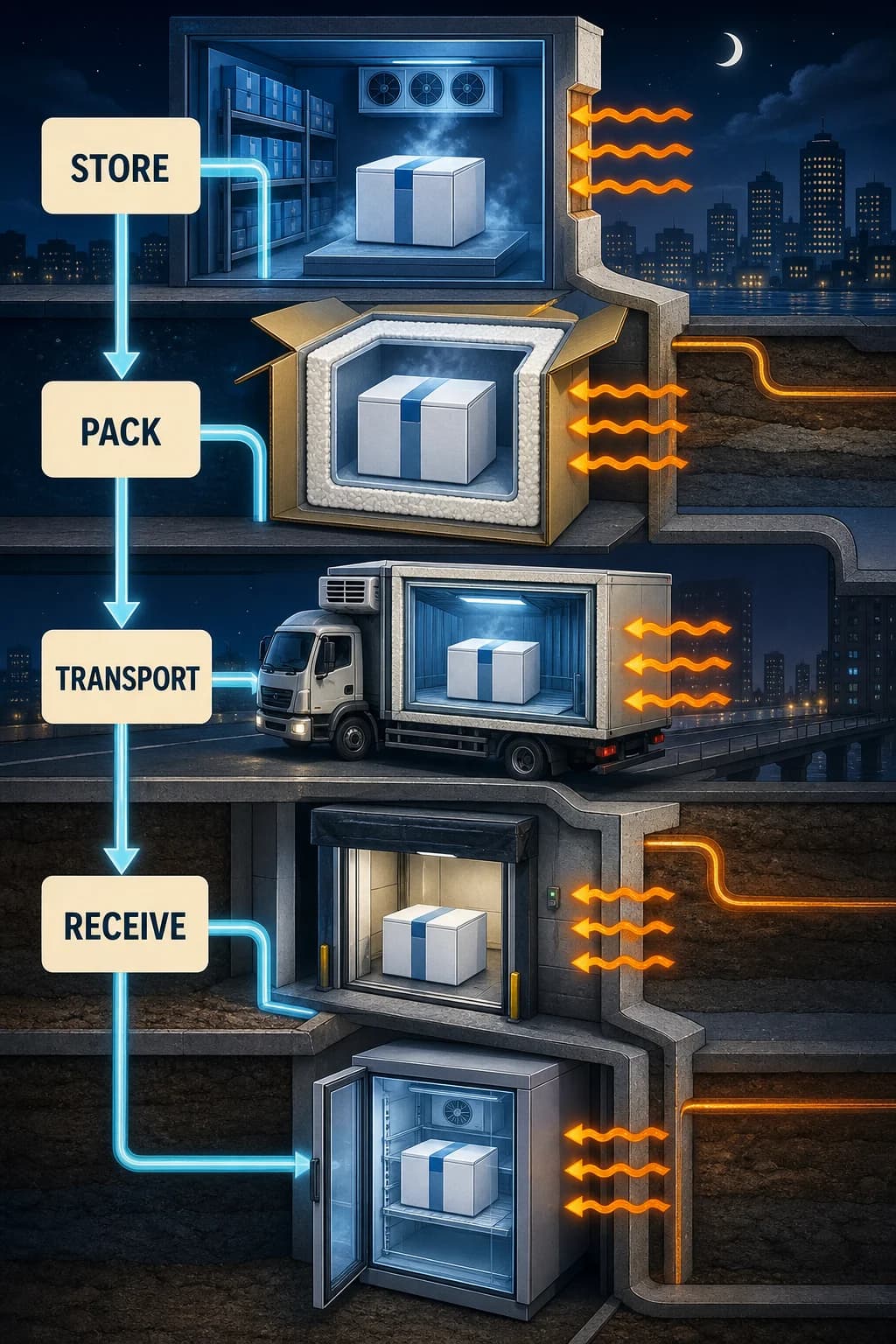
A cold chain is a temperature-controlled supply chain extending across storage, packing, transport, receiving, and use. Refrigeration removes incoming heat; insulation slows heat flow but can't stop it indefinitely. Thermal packaging adds time by surrounding the product with cold material and limiting air exchange, while doors, sunlight, warm docks, delayed vehicles, and poor airflow add heat.
Different products have different allowed ranges, and some are harmed not only by warmth but by freezing. The correct question isn't whether a truck or room felt cold. It's whether the product remained within its specified conditions at every stage and for the entire duration.
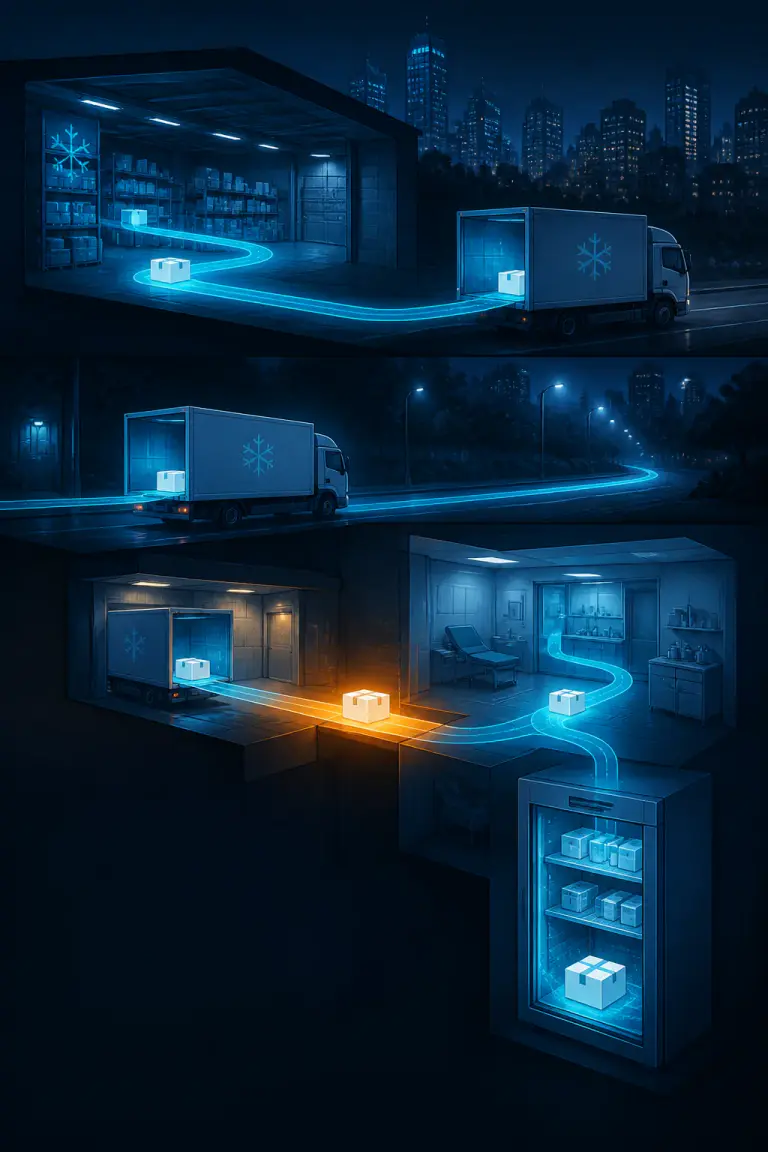
One package follows a continuous route from cold room through insulated shipper, refrigerated vehicle, receiving dock, and final cabinet while heat arrows challenge each barrier.
Page 2 of 3
A Snapshot Can Miss the Excursion
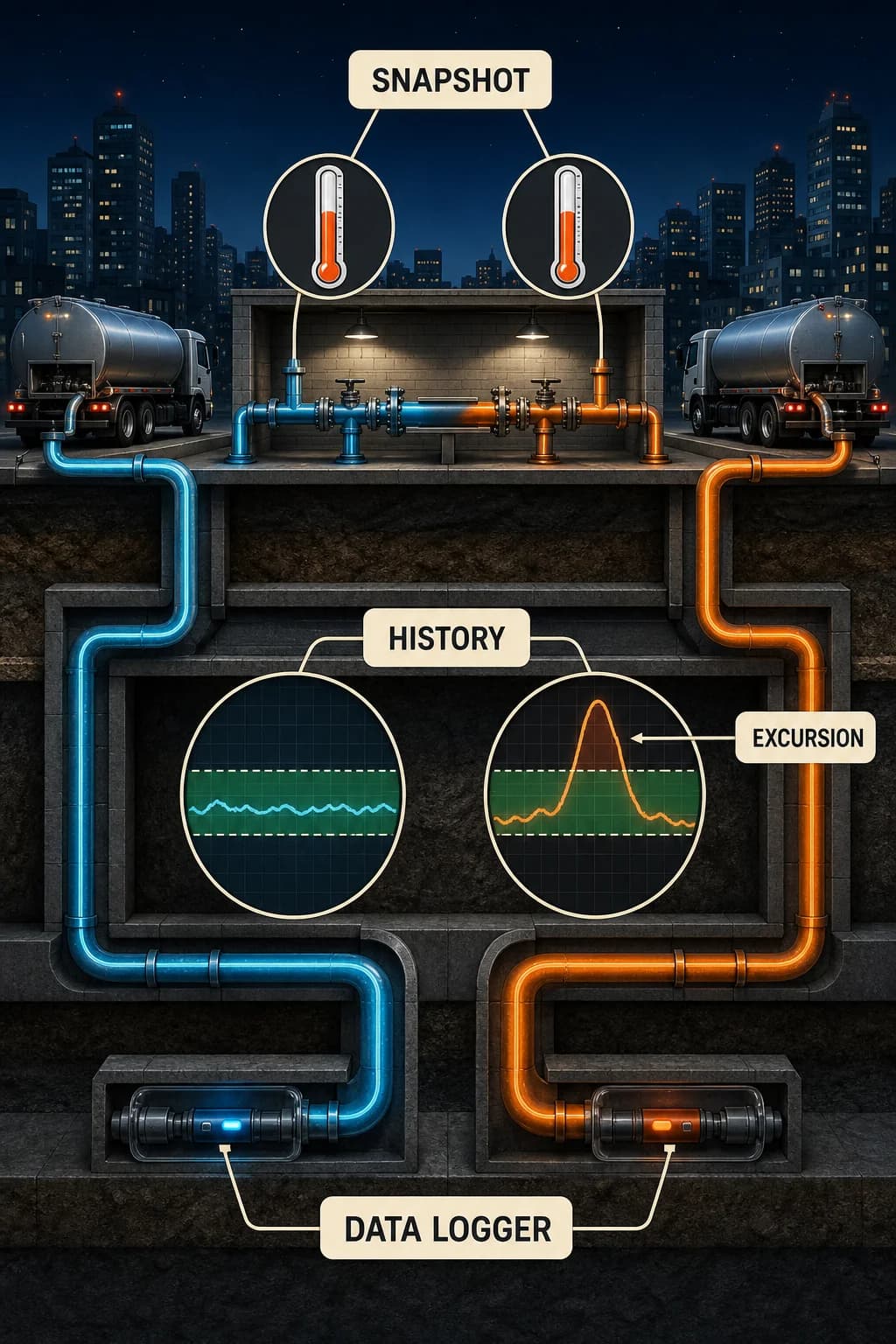
A thermometer read at delivery shows only that moment. A digital data logger can record temperature repeatedly, revealing the minimum, maximum, duration, and timing of an excursion that occurred hours earlier. Probe placement matters because air near a door or cooling outlet can change faster than the product itself.
Monitoring equipment also needs calibration, batteries, correct settings, and someone responsible for reviewing records. The history must travel with lot identity, expiration information, and custody records so a questionable shipment can be isolated. Data don't preserve the product by themselves; they make invisible thermal exposure detectable and support a defensible decision.
Two identical deliveries show the same final thermometer reading, but one continuous history stays within a safe band while the other contains an earlier warm spike revealed by a data logger.
Page 3 of 3
A Handoff Is Both a Thermal and Human Boundary
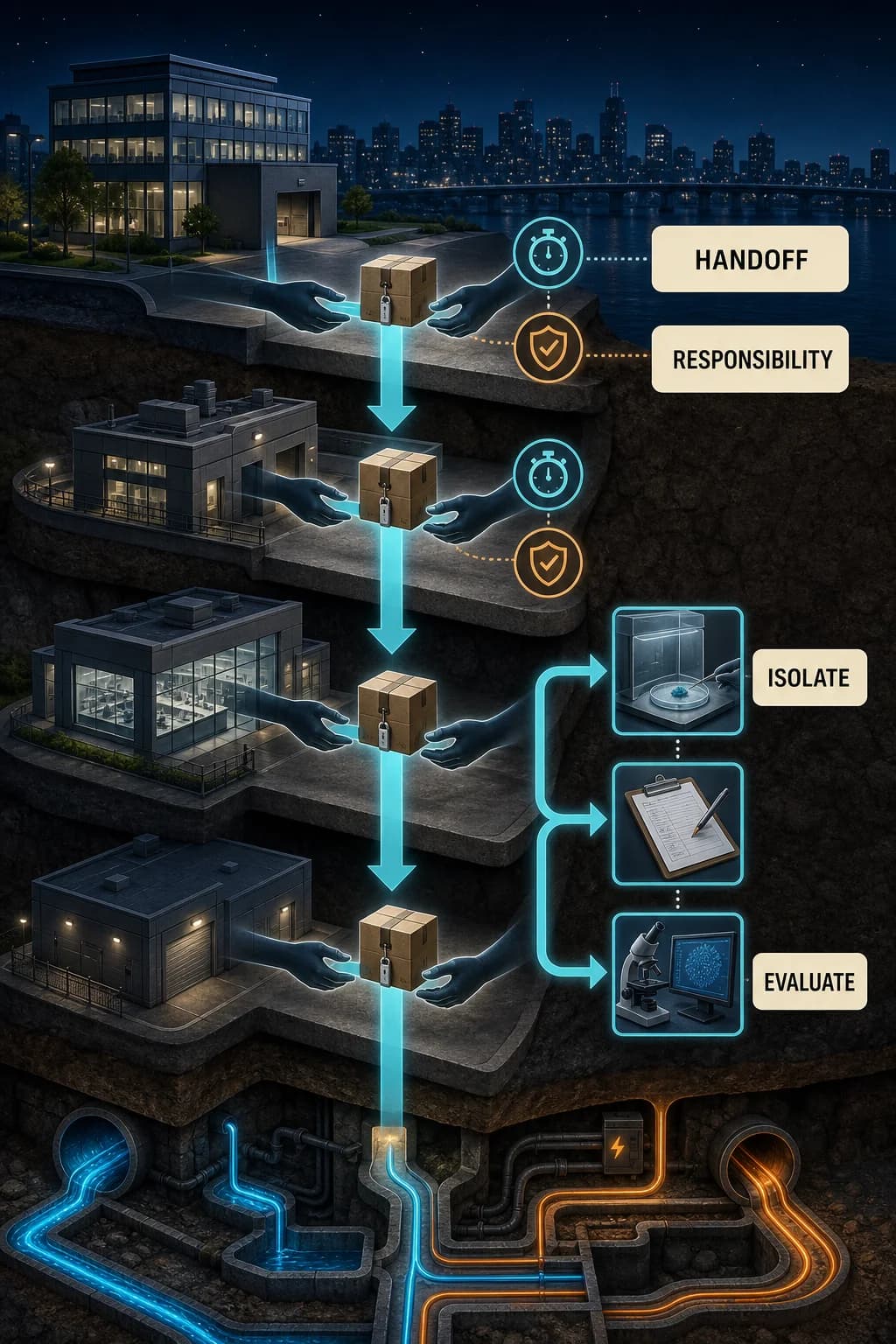
Every transfer between a warehouse, carrier, receiving team, shop, or clinic introduces time outside controlled storage and a change in responsibility. Clear packing procedures, conditioned coolant, pre-cooled equipment, rapid receiving, trained staff, alarms, backup power, and emergency relocation plans reduce the chance that one weak handoff breaks the chain.
When monitoring shows an out-of-range exposure, the correct response is usually to label and segregate the affected product, keep it under appropriate conditions, document the event, and obtain authoritative guidance instead of guessing or immediately using it. Resilience comes from planned responses as much as from colder equipment.
A chain of custody passes one package across four organizations; each handoff includes a time limit and responsibility token, while an excursion branches into isolate, document, and evaluate steps.
Key takeaways
Insulation buys time while refrigeration actively removes heat
A product's temperature history can reveal exposure that a final reading misses
Each organizational handoff needs both thermal control and assigned responsibility
Check your understanding
Why is insulation alone not indefinite protection?
It slows heat transfer but doesn't continuously remove incoming heat.
What can a data logger reveal that one delivery reading can't?
An earlier excursion's timing, duration, minimum, and maximum temperature.
What should happen to a product after a suspected excursion?
It should be isolated, kept appropriately, documented, and evaluated using authoritative guidance.
Sources
These references were used to check the important factual claims in this edition.