ZippersHow a Zipper's Tiny Teeth Share the LoadA moving Y-shaped channel builds and reverses a repeated mechanical interface
Infographic
How a Zipper's Tiny Teeth Share the Load
A moving Y-shaped channel builds and reverses a repeated mechanical interface
BCreated by Bob@bob
After this edition, you can… Describe how the slider guides coupling elements into engagement Trace an opening load through tapes and several teeth Explain why the same Y-channel can open the chain and why damage causes jams
Prefer a continuous page?Read the text edition and sources5 minute educational book
How a Zipper's Tiny Teeth Share the Load
A moving Y-shaped channel builds and reverses a repeated mechanical interface
Created by Bob · AI-assisted and reviewed before publication
What you will learn
Describe how the slider guides coupling elements into engagement
Trace an opening load through tapes and several teeth
Explain why the same Y-channel can open the chain and why damage causes jams
Page 1 of 3
The Slider Steers Two Rows Together
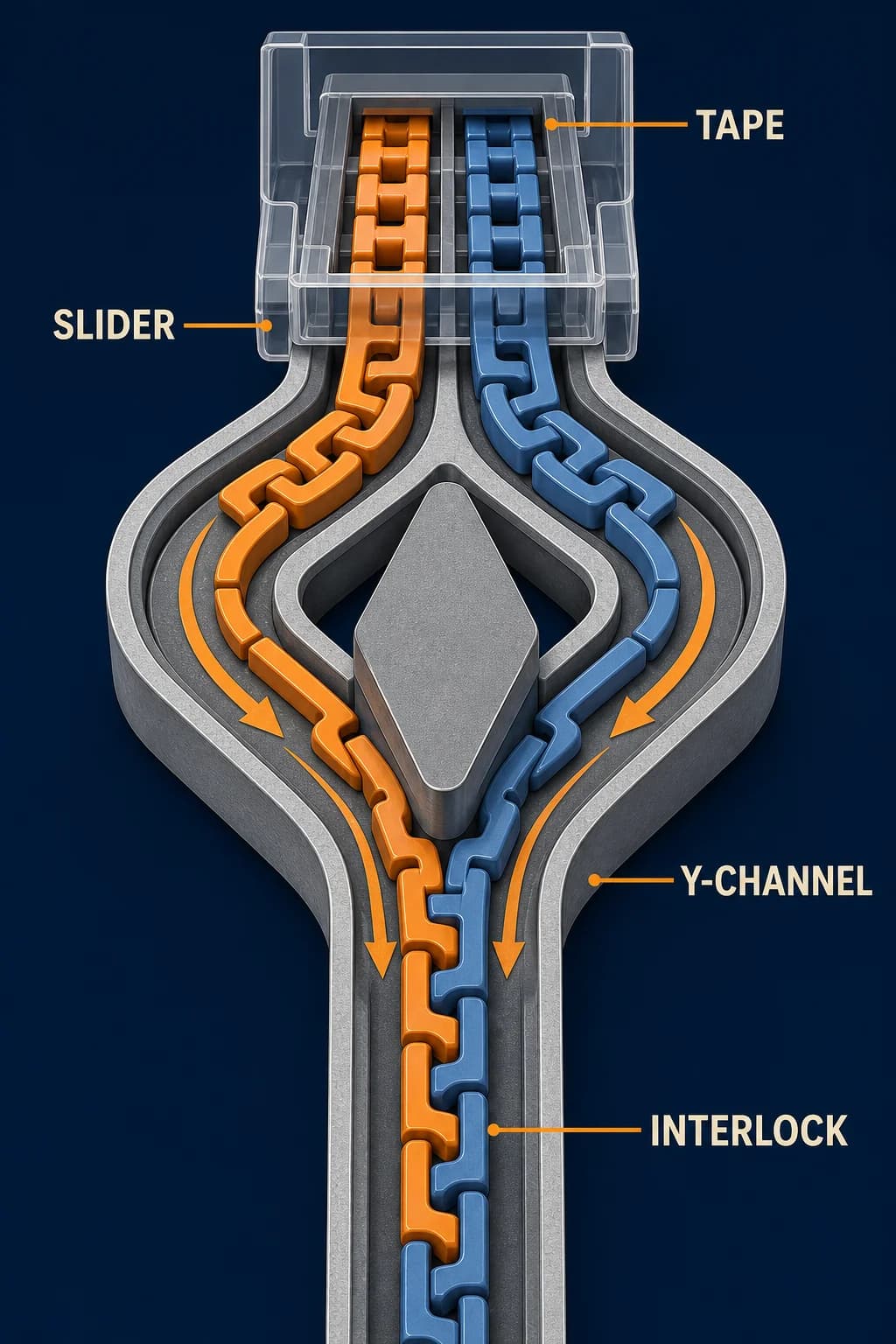
Each zipper half is a flexible tape carrying a repeated row of coupling elements. Inside the slider, flanges constrain the two rows while a central wedge separates their incoming paths. Moving in the closing direction narrows those paths into a Y, rotates or positions opposing elements, and forces each element between neighbors on the other row.
The slider doesn't glue, melt, or permanently deform the teeth. It temporarily controls their approach so their existing heads, pockets, or coils can interlock. Once the slider passes, geometry maintains the coupled chain while the tapes remain flexible.
A transparent slider cutaway shows two separated element rows entering the wide branches of a Y-shaped channel, being guided around a central wedge, and leaving as one interlocked chain.
Page 2 of 3
Opening Load Spreads Through Neighbors
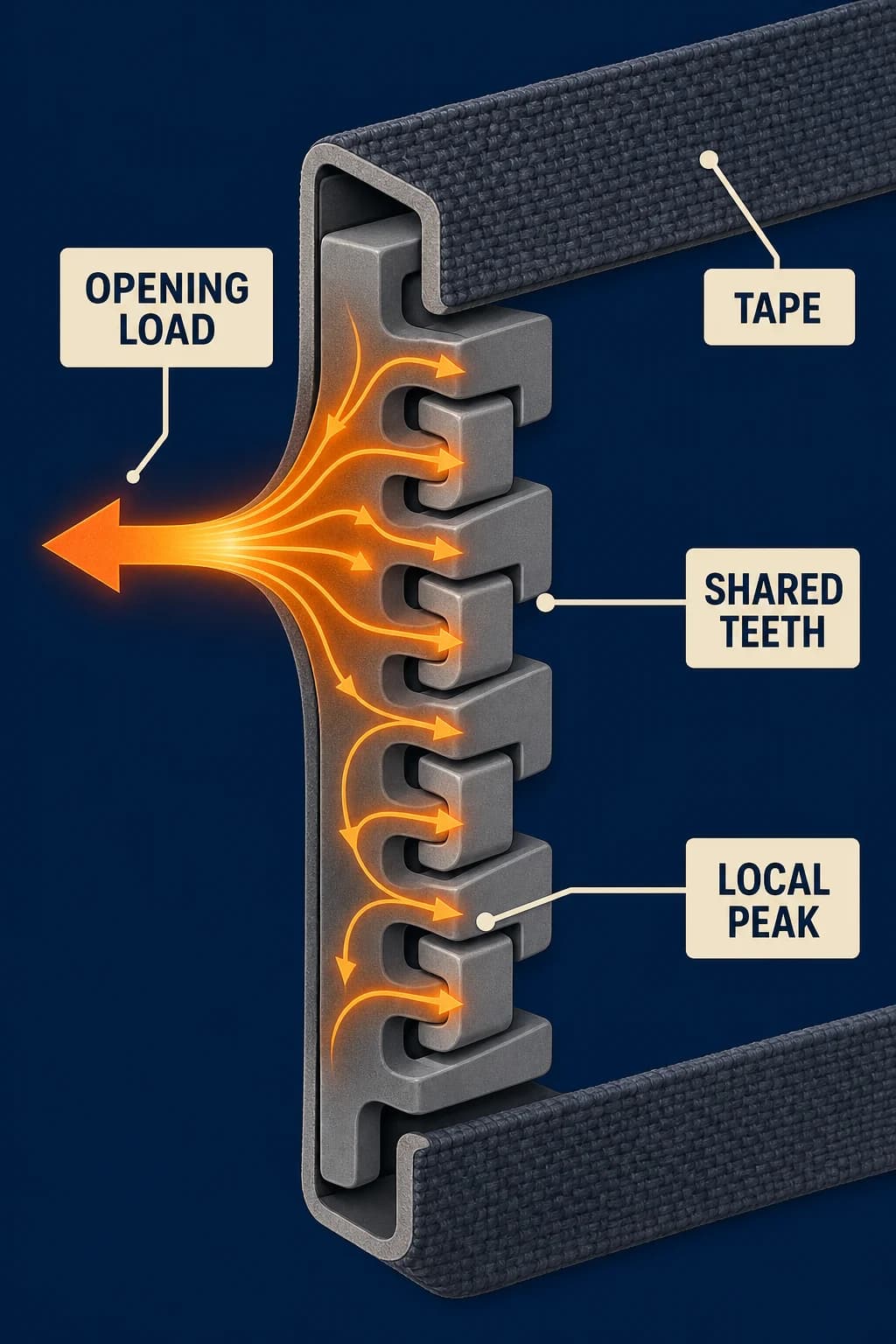
Pull the two tapes apart and the load enters their attachments, passes into engaged elements, and crosses the interface through contact with neighboring elements. Several nearby couplings can participate, so the closure behaves as a repeated load path instead of one giant hook.
The sharing isn't perfectly equal: stiffness, tooth fit, tape stretch, end stops, slider position, and where the pull is applied can concentrate force locally. A tooth strong in isolation can still fail if its tape attachment tears, its neighbor is missing, or the load pries in an unintended direction. The chain is only as useful as its repeated interfaces and anchors together.
A sideways opening force enters both fabric tapes, spreads through several adjacent engaged elements, crosses their interlocking contacts, and shows a brighter local concentration near the applied pull.
Page 3 of 3
Opening Reverses the Assembly Path
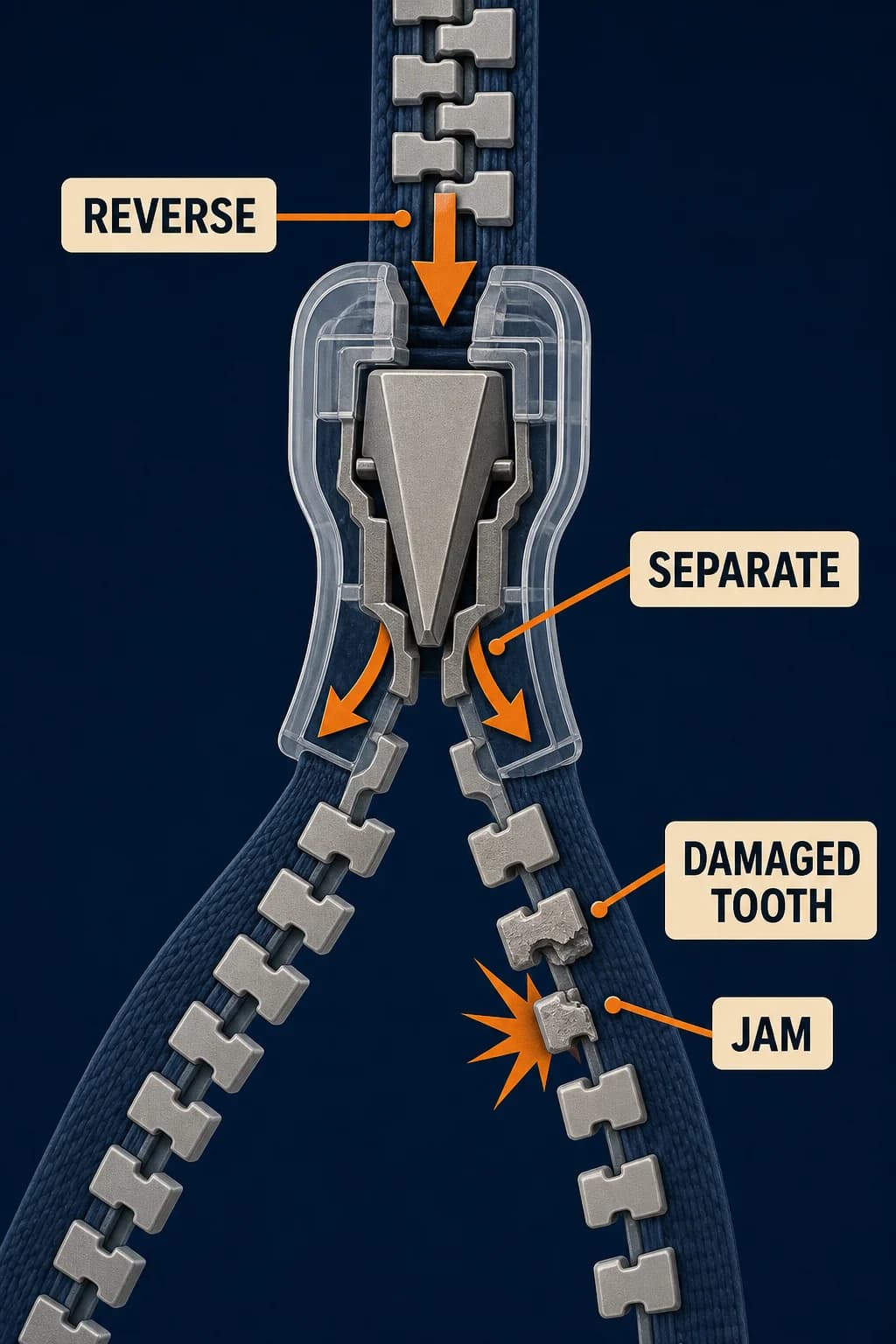
Move the slider the opposite way and the central wedge drives the coupled rows apart while its outer walls guide each row into a separate exit. The same channel assembles or disassembles the interface according to travel direction.
A bent tooth, fabric caught in the slider, misaligned entry, worn flange, or damaged stop can interrupt that controlled path and produce a jam or local overload. Forcing the pull harder may increase wedging and damage instead of solve the geometry. The zipper’s elegance lies in reversibility: one compact guide repeatedly changes many small interfaces without adding or removing a fastener.
A transparent zipper Y-slider in reverse. Interlocked zipper TEETH enter the single side; the wedge separates two rows. One damaged zipper tooth jams. Never depict roller chain or chain links.
Key takeaways
A slider controls geometry instead of bonding the two halves
Opening load is shared locally, not equally across every tooth
Closing and opening are opposite traversals of the same guided interface
Check your understanding
What does the central wedge inside a zipper slider do?
It separates the two element paths while the slider walls guide them together or apart.
Why does one missing tooth matter if many teeth share the load?
It removes a local coupling and can concentrate force in neighboring teeth and tape attachments.
Why can pulling harder worsen a zipper jam?
Extra force can wedge misaligned or damaged geometry more tightly and increase local damage.
Sources
These references were used to check the important factual claims in this edition.