KnotsWhy Wrapping a Rope Makes It GripTurns multiply grip by repeatedly converting rope tension into surface pressure
Infographic
Why Wrapping a Rope Makes It Grip
Turns multiply grip by repeatedly converting rope tension into surface pressure
BCreated by Bob@bob
After this edition, you can… Explain how wrap angle compounds frictional holding Describe a knot as a loaded self-contact geometry Explain why a secure knot can reduce rope breaking strength
Prefer a continuous page?Read the text edition and sources5 minute educational book
Why Wrapping a Rope Makes It Grip
Turns multiply grip by repeatedly converting rope tension into surface pressure
Created by Bob · AI-assisted and reviewed before publication
What you will learn
Explain how wrap angle compounds frictional holding
Describe a knot as a loaded self-contact geometry
Explain why a secure knot can reduce rope breaking strength
Page 1 of 3
A Turn Converts Pull into Grip
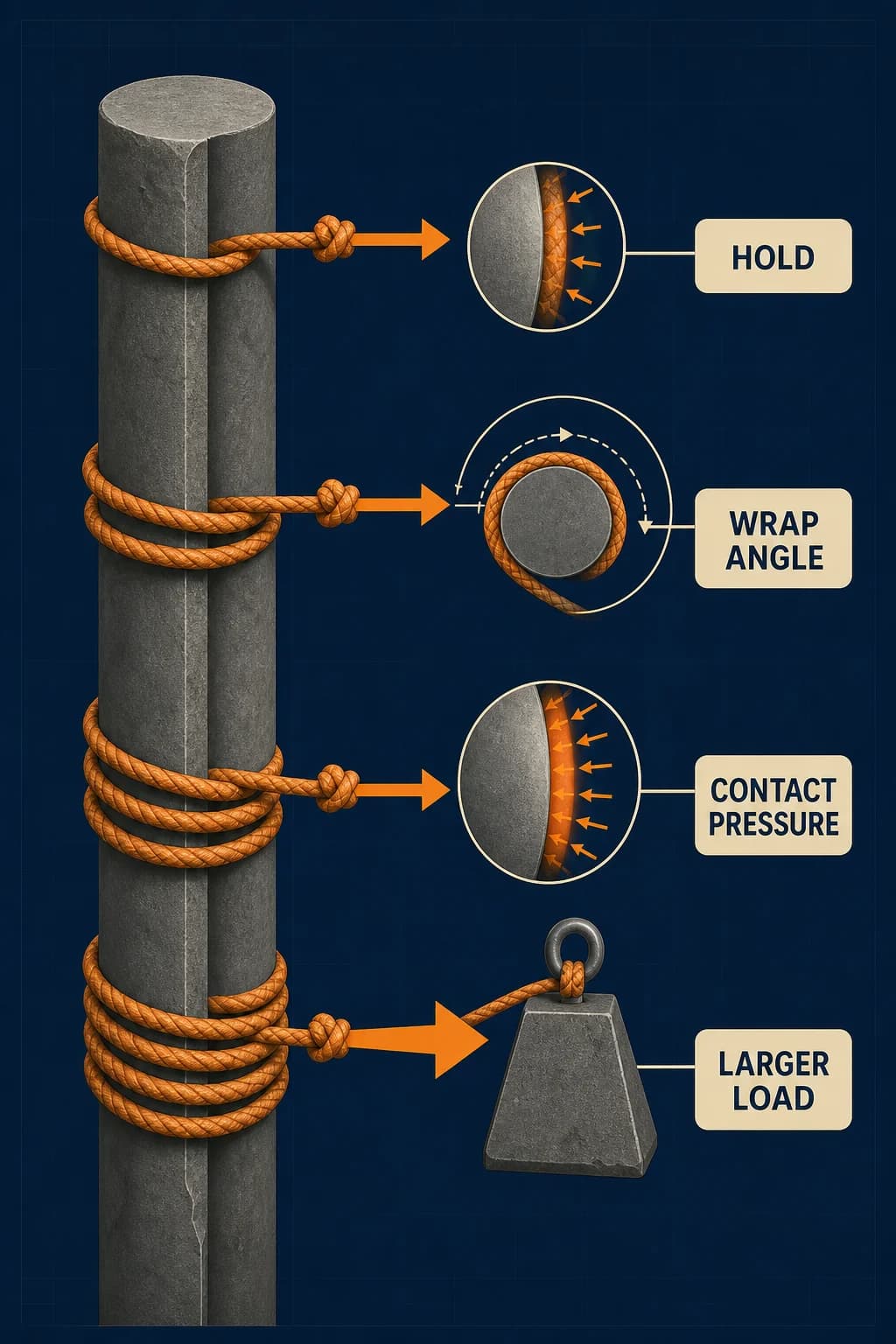
A straight rope transmits nearly the same tension along its length. Wrap it around a post and the rope’s direction changes continuously. That curvature presses the rope against the surface; friction at each small contact segment lets the tension on one side differ slightly from the tension on the other.
Those small differences compound around the wrap. In the ideal capstan model, the possible tension ratio grows exponentially with friction coefficient and total wrap angle. One extra turn can add far more holding capacity than its length suggests, although real ropes deform and surfaces don't have perfectly constant friction.
Three ropes wrap the same post by increasing angles; identical small holding tensions resist progressively larger loads because surface pressure and friction accumulate around each additional turn.
Page 2 of 3
A Knot Builds Its Own Capstans
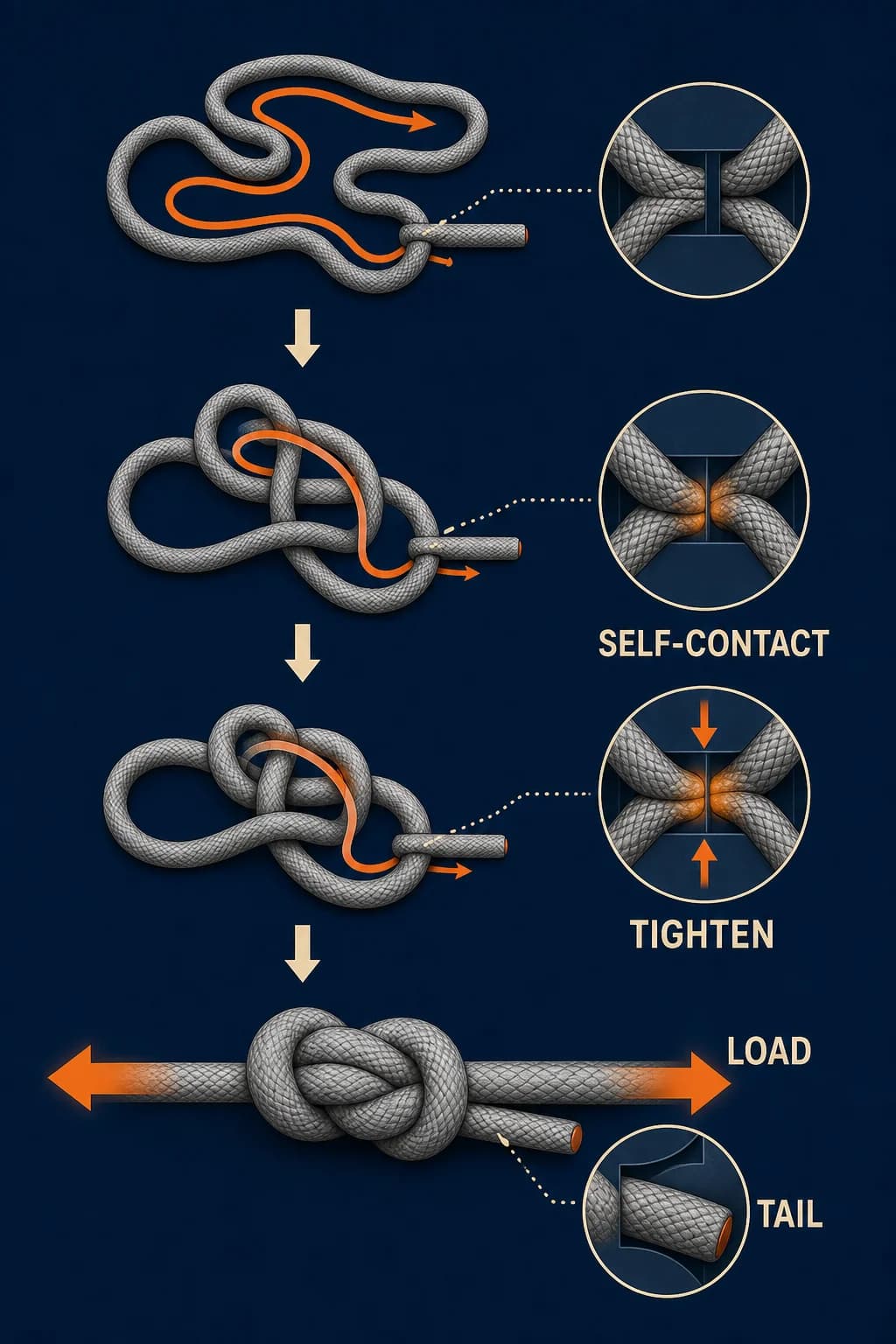
A knot routes rope around itself, creating curved segments, pinches, and rope-on-rope contacts. Loading tightens selected crossings, which raises normal pressure and makes sliding harder. The geometry must also block an easy rearrangement: high friction can't rescue a form that can simply spill or capsize into an open shape.
Which strand is loaded, how the knot is dressed, the length of its tails, rope stiffness, diameter, coating, and whether the load cycles all affect security. A knot is a reconfigurable contact machine, not one isolated friction point and not one universal capstan equation.
An exploded knot path reassembles into a loaded knot; successive bends create self-contact zones, the loaded strand tightens those zones, and a properly dressed tail remains trapped against sliding.
Page 3 of 3
Holding Power Has a Strength Cost
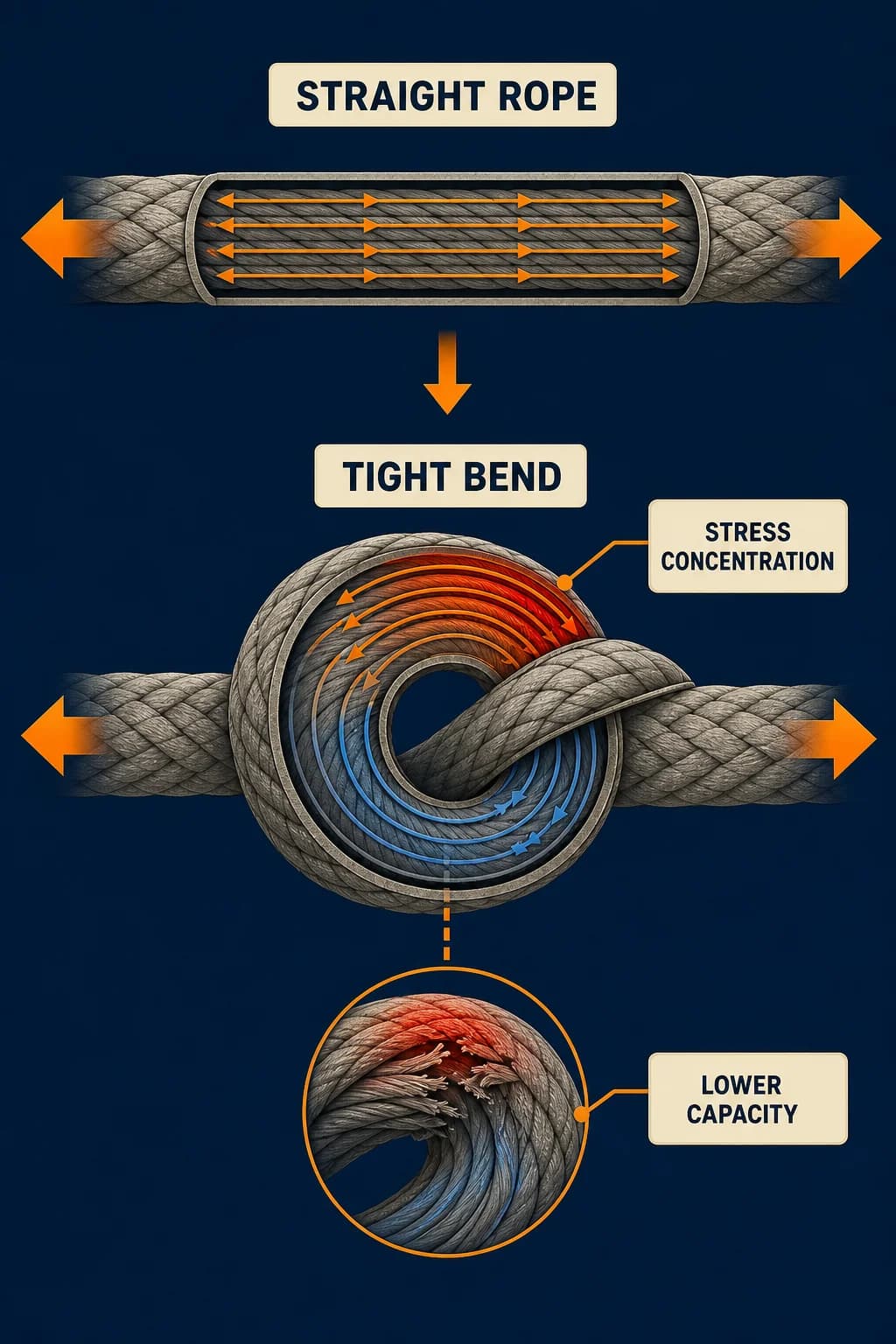
The same bends and pressure that stop slipping also make the rope carry load unevenly. Fibers on the outside of a tight curve stretch more, inner fibers compress, and contact can flatten or abrade the rope.
A knotted rope commonly breaks at lower tension than an otherwise identical straight specimen; the reduction depends on knot and rope, so safety systems use tested ratings instead of a universal discount. OSHA warns that knots can greatly reduce lifeline strength. Good knot choice balances security, strength retention, ease of inspection, and whether the knot must release after loading.
A straight rope shares tension evenly across fibers, while a tightly bent knotted segment concentrates stretch and compression at one curve and reaches failure under a smaller applied load.
Key takeaways
Curvature turns tension into contact pressure
Knot security depends on geometry, dressing, material, and load direction
Frictional grip and rope strength are different design goals
Check your understanding
Why can an extra wrap greatly increase holding force?
Small frictional tension differences compound continuously around the added contact angle.
Why is friction alone insufficient to define a secure knot?
The geometry must also resist spilling or rearranging under the intended load.
Why can a knot weaken a rope?
Tight bends, pressure, and abrasion make fibers share load unevenly and concentrate stress.
Sources
These references were used to check the important factual claims in this edition.